Pakistan shares land borders with four countries — Afghanistan, China, India, and Iran — and each one tells a different story right now. One is essentially closed to tourists, one is one of the most spectacular border crossings on earth, one hasn't allowed a single foot crossing in over a year, and one requires an armed convoy. Here's exactly where things stand in 2026, border by border.
The Afghanistan Border: Torkham and Chaman
Pakistan's border with Afghanistan has eight formal crossing points, but only two — Torkham and Chaman–Spin Boldak — carry international status. Neither is currently usable by tourists.
Torkham, the busiest and best-known crossing, was closed for weeks in early 2026 amid clashes between Pakistani and Afghan Taliban forces. It reopened on March 31, 2026, but only for the controlled, one-way return of Afghan nationals and undocumented migrants living in Pakistan. There is no trade activity, no general passenger movement, and critically, no entry into Pakistan from Afghanistan at this crossing. Chaman–Spin Boldak remains closed to foreigners entirely.
For now, if you're planning an Afghanistan–Pakistan overland route, this isn't it. Our existing Afghanistan land border guide covers the crossings that are working from the Afghan side, including Torghundi and Islam Qala with Iran and Turkmenistan.
The China Border: Khunjerab Pass
This is the border most people picture when they imagine overland travel through Pakistan — and for good reason. At around 4,600–5,000 metres above sea level, Khunjerab Pass is the highest paved international border crossing in the world, carrying the Karakoram Highway between Sost, Pakistan, and Tashkurgan in China's Xinjiang region.
A few things to know before you go:
- Seasonal only — the pass is typically open from around April/June through October/November, closing whenever heavy snow makes it impassable. There's no fixed calendar date; it depends entirely on the weather that year.
- Open weekdays only — Monday to Friday, with the Pakistani side operating roughly 9am–5pm Islamabad time and the Chinese side 11am–8pm Beijing time. Both sides close for Chinese and Pakistani public holidays too.
- You need a valid Chinese visa arranged before you arrive — there's no visa on arrival here.
- A Khunjerab National Park entrance fee applies to all foreigners on the Pakistani side. This has crept up over the years — historically around 1,300 PKR (roughly $8–10 USD), though recent traveller reports put it closer to $40 USD. Worth confirming the current rate before you travel.
- You can't drive yourself across on the Chinese side — you'll need to be part of a group or arrange a Chinese guide, which isn't cheap solo.
- Bring snacks, water, and patience. Immigration on the Chinese side is thorough — expect luggage, laptop, and phone searches — and the crossing from Sost to Tashkurgan can take the better part of a day.
The India Border: Wagah–Attari
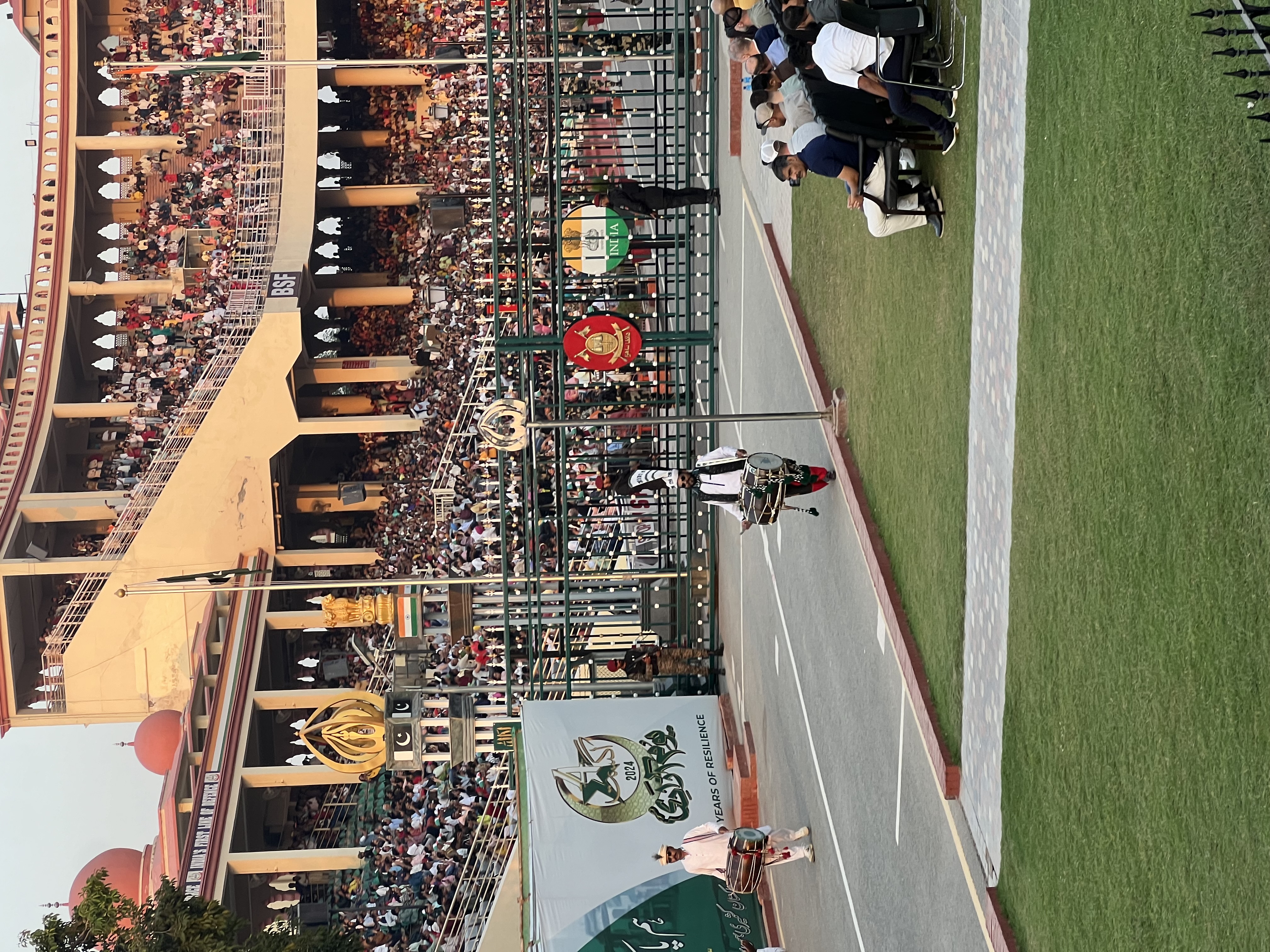
Wagah, near Lahore, is Pakistan's only fully operational international crossing with India — or at least, it used to be. Following an attack that killed 26 people in the Jammu and Kashmir region in April 2025, the Wagah–Attari border has been closed to all foot traffic in both directions, with no timeline given for reopening.
What you can still do is attend the famous Beating Retreat ceremony — the daily flag-lowering display performed jointly by Pakistan Rangers and India's Border Security Force, known for its theatrical, high-energy choreography and patriotic crowds on both sides. The ceremony runs at roughly 4–5pm depending on the season, entry is free, and it's worth arriving 2–3 hours early with ID for security checks. You just won't be crossing the actual border here for the foreseeable future.
The Iran Border: Taftan and Rimdan
The Pakistan–Iran border in Balochistan sees a steady flow of overland travellers, pilgrims heading to Iran and Iraq, and cross-border trade, mainly through two crossings: Taftan (paired with Mirjaveh on the Iranian side) and the newer Rimdan crossing.
Taftan is open and fully operational for both trade and pedestrians, but foreigners face extra requirements: you'll need a No Objection Certificate (NOC) from the Home Department in Quetta before you can travel through the region, and movement between Quetta and Taftan is restricted to organised convoys for security reasons — you can't simply drive or bus yourself there independently.
Rimdan, the more recently opened crossing, is generally recommended over Taftan by recent travellers: it's a shorter route, and doesn't require the same NOC process. If you have the choice, it's the easier option.
While these border crossings may be open, we currently do not recommend travel to Iran due to the ongoing conflict with the United States (July 2026).
Our Practical Tips for Crossing Pakistan's Land Borders
- Border status in this region changes fast — treat everything here as a snapshot of 2026, not a permanent state of affairs, and always check with us directly before finalising an overland itinerary.
- Where a convoy or NOC is required (Taftan), build in extra time — these aren't same-day processes.
- For Khunjerab, sort your Chinese visa well in advance and don't assume the pass is open just because it's technically 'in season' — always check current conditions before committing to a route.
- If a border is politically sensitive (Wagah, Torkham), have a backup plan. Flights remain the reliable fallback when land crossings are unpredictable.
Want to join us in Pakistan?
Navigating travel can be tricky, but by joining a Saiga Tours Pakistan group tour, we can take out that hassle. See our Pakistan group tour dates here and send us an email to [email protected] to secure your place on our next tour!