In this guide, we’ll only be covering the areas of Mali that are lower risk for travellers.
Bamako
Bamako is the capital city of Mali. Here is where you will find the widest selection of shops, restaurants and hotels. It has a blend of traditional homes and markets, as well as modern skyscrapers. You can even find the occasional pub quiz!
Traditional Medicine Market
There are a few markets offering dried plants and animals used in the traditional medicine of Mali. The largest can be found in the northwest corner of the Medina Coura market. Here you can find things like bags of dead hedgehogs, monkey heads, dried lizards, and many other things that you will struggle to get back through customs.
Grand Marche de Bamako
This is the main market of Bamako. You can find unique handmade souvenirs and handicrafts here, as well as the usual made-in-China products commonly found in city markets. As the main market, it is often very crowded and is a sensory overload of people, sounds, and smells. Whatever you are looking for, you can likely find it at the Grand Marche.
Tower of Africa
This 46m tall monument to Pan-Africanism and independence is a landmark of Bamako. It represents the unity of African nations. The tower features four hands holding the upper part of the structure aloft. You can buy a ticket and climb to the top of the tower for a panoramic view.
Central Mali
Segou
Segou has wonderful mud architecture that is unique to this part of the world. One of the highlights of this region is the Great Mosque of San . Similar to other great Malian mosques, it is characterized by its mud exterior with wood beams jutting out of its facade.
Segou-Koro is a small mud village that is popular to tourists. It is so small, you might even meet the chief of the village himself. There are also many artisans here selling things like textiles and pottery. You can watch them work while you peruse their crafts.
You can visit Segou-Koro and San as a day trip from Bamako.
Mopti
The Grand Mosque of Mopti is another great example of the Sudano-Sahelian style architecture that Mali is famous for. Though it looks similar to some of Mali’s much older mosques, this one is actually quite modern. It was built in the 1930s under French colonisation.
If you’re in Mopti, check out Bar Bozo , which is the main hang for foreigners. Though tourist numbers in Mali aren’t high, you might meet some other travelers here. However, because it is a known tourist hotspot, you will likely encounter sellers and guides offering wares and boat rides to Timbuktu and tours of Dogon Country. If you need a guide, do your research ahead of time and avoid the sellers here.
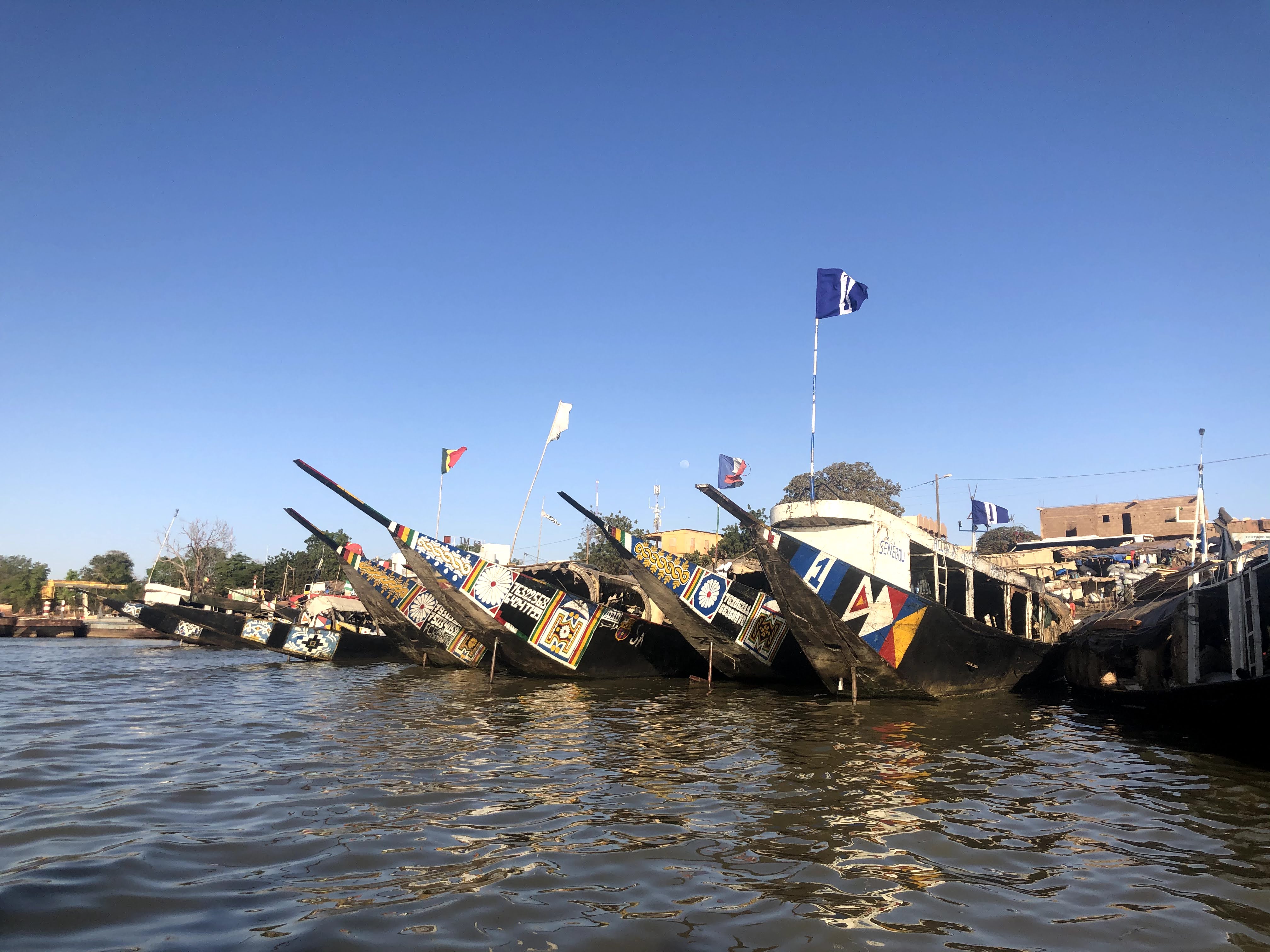
Another thing you can do from Mopti is take a small boat to one of the Bozo fishing villages . You can do the boat ride round trip in two hours, and it should not cost more than 5,000 CFA.
Djenne
The Great Mosque of Djenne is what brings people to this region of Mali. Built during the 13 th century, this massive structure is still the world’s largest mud-brick structure. It is characterised by round architectural elements, and decorated with wood spikes that also serve as scaffolding. The mosque is maintained by the locals during a festival each year called “La fete de crepissage” where a new layer of mud is spread onto the building.
Safety Note: While the mosque and Djenne itself remain fairly safe, the road to Djenne can be troublesome and many tourists have encountered unsafe situations such as robberies. Visit this region with caution.
Gouina Falls
This large waterfall is located on the Senegal River near the village of Banganoura in the far west of the country. Gouina Falls is about 16 meters tall and 500 meters wide, so you definitely won’t miss it! Along the river, you can find many large flat rocks to have a picnic with a view of the falls.