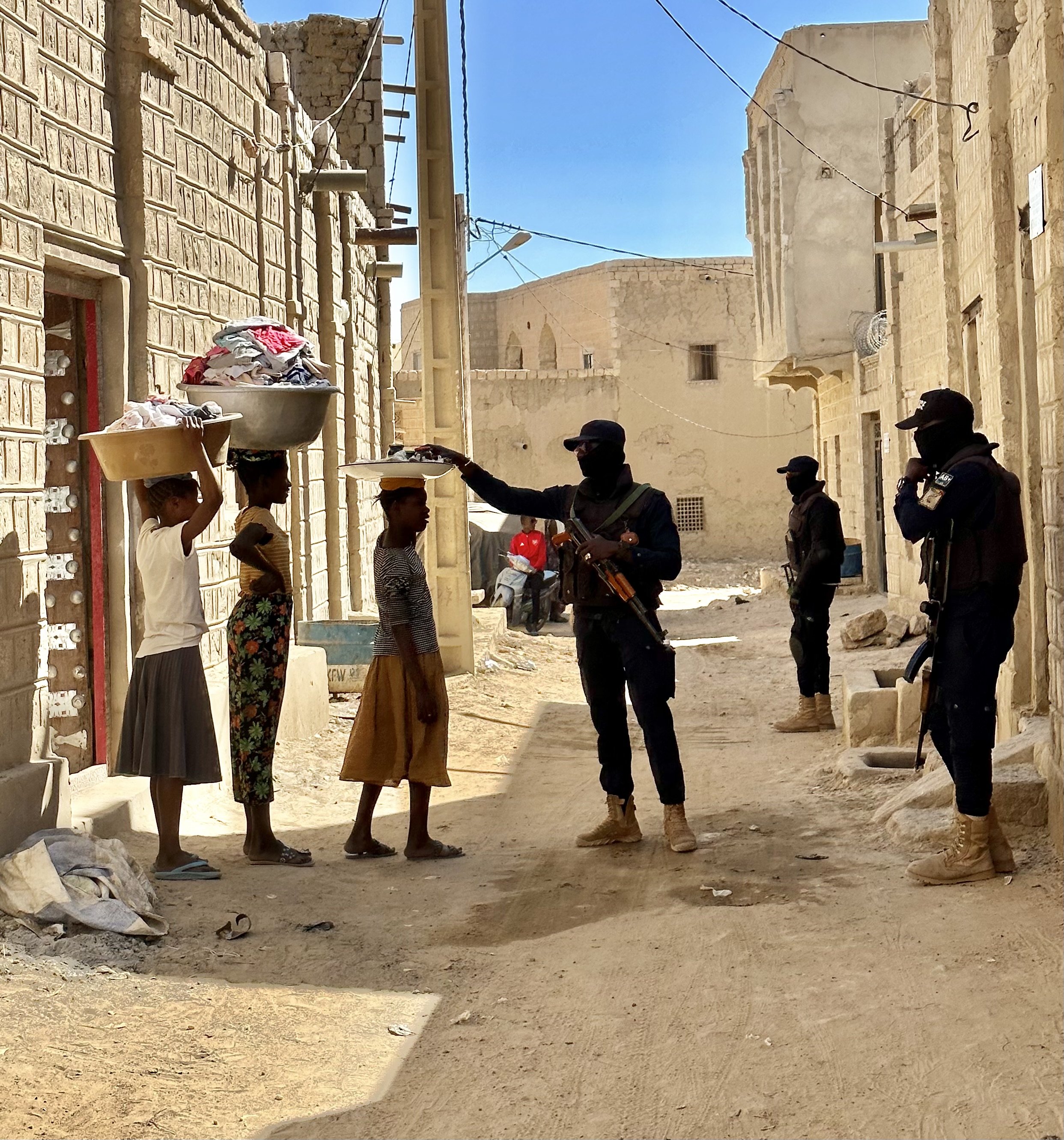
Mali’s cuisine is similar to that of its West African neighbours, but, of course, Malians put their own spin on things. A large part of their diet relies on cereal grains like rice, sorghum, and millet. These will be accompanied by stews and sauces, usually comprised of ingredients like spinach, tomato, sweet potato, peanuts, and items not commonly found outside of Africa, such as Baobab. Of course, in cities, you can find typical western food like burgers and pizza, as well as restaurants centered around other cuisines.
Malian Dishes
Tigadegue Na
This is the national dish of Mali. It is a hearty peanut stew of meat and vegetables like eggplant, tomatoes, and okra. The name Tigadegue Na literally translates to “peanut butter sauce”. It is quite like Maafe in Senegal, though a bit soupier. One of the unique flavours of the dish is in its cooking oil – it is typically made with unrefined shea butter. Tigadegue Na is best served with rice to soak up the saucy goodness. Traditionally, this would be eaten by hand out of a large, shared dish with friends or family, but it can also be eaten with a spoon.
Fufu (also called Foutou)
Fufu is a small starchy yellow ball typically made of plantains, yams, cassava. In Mali, it is most commonly made using plantains. The fruit is pounded after boiling until it forms a thick paste. Cassava flour or water is then added to get the right consistency, then it is shaped into balls to be served with stews or on its own covered in sauce. It is a common dish throughout West Africa, but it varies slightly from country to country, particularly the base ingredient. Fufu is typically eaten with the fingers and used as an aid to pick up saucy dishes.
Jollof Rice (also called Tiep)
This flavourful tomato-based rice dish is quite popular across West Africa. In Mali, it is common to see it prepared with fish, meat (beef or goat), or chicken. Any available veggies, such as carrots, cassava, cabbage and onion, and fresh flavouring agents like hot peppers and lime, are added along with spices and rice in one big pot. Like many dishes in Mali, it is typically served up on a large platter meant for sharing.
Le Capitaine
Although landlocked, the Niger river flows throughout south and central Mali, which means a wealth of river fish. Le Capitaine celebrates these fish by letting the fish itself do most of the talking in this dish. Often it is prepared with Nile Perch that is cooked and served with a simple butter sauce. Other variations season the fish in salt, pepper, and lemon, then deep fry it and complete the dish by serving it with plantains and peppers.
Poulet Yassa
This delicious chicken dish is sweet, spicy, and tangy all at once. First, the chicken is marinated in alliums like garlic and onion along with vinegar, mustard, chili peppers, and lemon juice. Then the chicken is grilled (or sometimes fried) and served with a sauce made from caramelised onions. The dish is served with rice, and is a mouthwatering flavour experience you should keep an eye out for when in Mali.
Drinks
Boabab Juice
This juice, of course, comes from the Baobab tree. It comes from harvesting the fruit of the tree. The hard-shelled fruit typically dries out naturally. Then, the softer white pulp inside along with the seeds can be extracted and blended to make juice. The juice can range from bitter to sweet, but usually has a tangy citrusy flavor.
Jus de Bissap
This is a delicious and refreshing juice made of hibiscus flowers. The flowers are first dried, then boiled like a tea. The flavor is tangy and tart, almost citrus-like. Adding sugar and clove can help to aid the tartness.
Ginbear G
Made from fresh ginger, lemon, and mint, this juice borders on a health tonic. The flavor is sharp and zesty, with lots of heat coming from the fresh ginger. In addition to being a juice that’s bursting with flavour, it is also believed to have a multitude of health benefits.
Alcohol
Alcohol is legal in Mali, however due to the country’s majority muslim population, it is discouraged and even prohibited in some areas. In Bamako and other large cities, you will be able to find it, but you might struggle in rural areas. Despite much of the population viewing alcohol as taboo, Mali has one of the lowest legal drinking ages in the world at 15 years old.