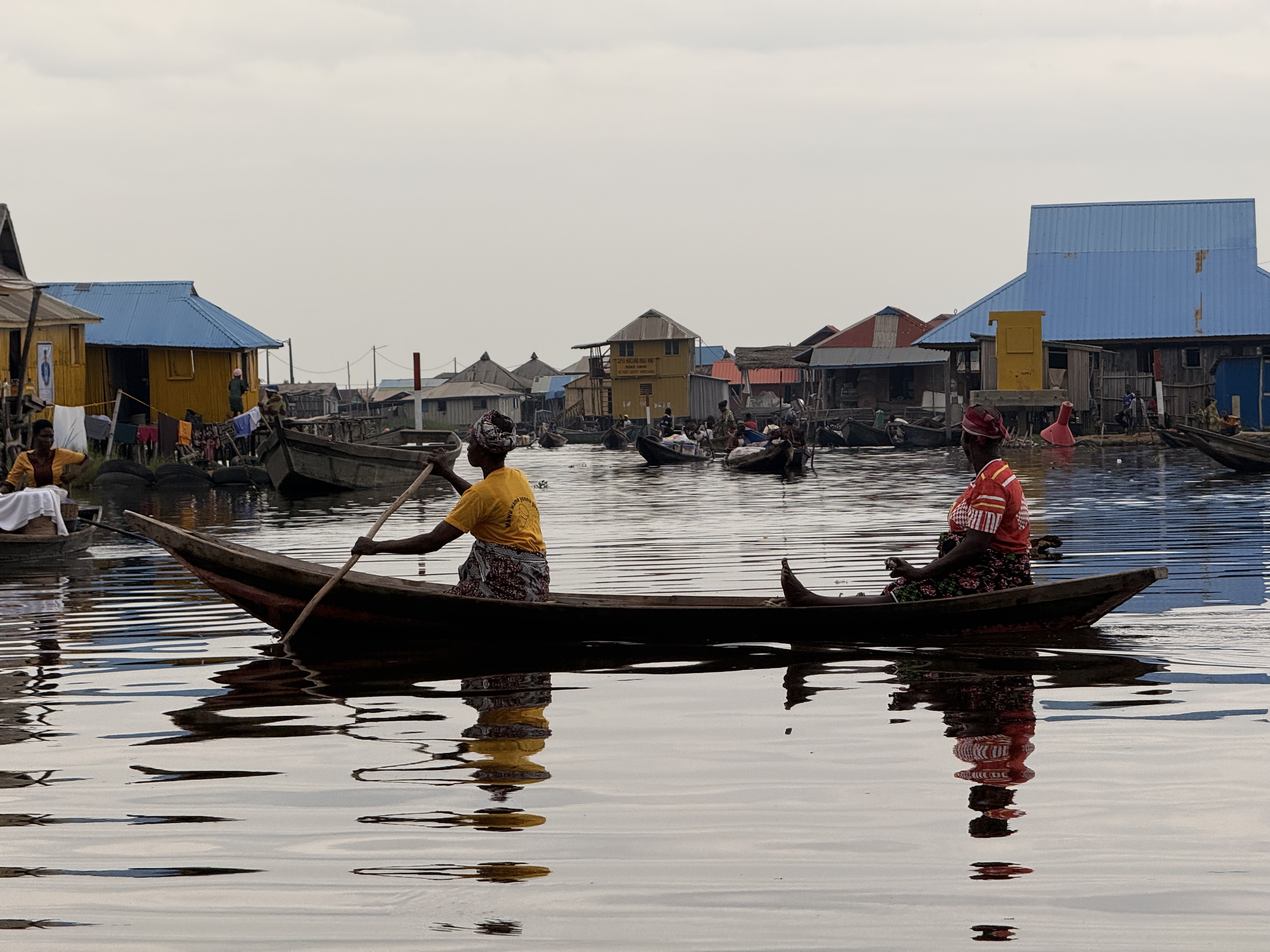
Ganvie, lies roughly 30km from Benin’s largest city, Cotonou. Lining the banks and the lake of the north shore of Lake Nokoué this city is completely located on the lake with only very tiny strips of sand mixed in for larger buildings. There are no roads or paths between buildings which means the only way in, out and around the village is by canoe. Ganvie is the largest lake village in all of Africa and its windy maze of buildings across the lake has given it the name the ‘Venice of Africa’.
It is estimated that there are 30-40,000 people residing in Ganvie and the population is still growing. Here you can find everything you would in a normal town from supermarkets, barbers, bars, restaurants, school, mosques, churches and even voodoo shrines. What started as a way to escape slave traders in the 17 th century has now blossomed into one of Benin’s most interesting villages who have developed a way of life completely in harmony with the lake.
The History of Ganvié
This stretch of coast in West Africa was infamous for being the heartland of the transatlantic slave trade, with an estimated over 2 million people here captured and sent to the Americas. The people that were sent away as slaves were first captured by warring African kingdoms and then sold to the Europeans before being shipped out. The Tofinu people who inhabit the lake were once a target of these attacks and so decided to move to the water as a way to secure themselves from raids of the Dahomey Kingdom.
This was particularly effective as the Dahomey warriors had a custom that forbid them from attacking people on water. This left the village safe from raids and was one of the only ways the people could stay safe. The name of the village Ganvié roughly translated to “we survived” and the people who live here today are direct descendants of those first people who fled the slave trade.
What Ganvié Looks Like Today
Ganvié today is a thriving and growing village with everything you’d find in a normal town. The majority of people in Ganvie make their living by fishing with traditional methods on the lake. As you make your way across Lake Nokoué you can see many examples of nets and fish storage as well as little guard houses to protect the catch across the lake.
There are both markets in Ganvié itself with are large structures that boats congregate under selling fresh fruits and vegetables from the mainland. The majority of the fish gets taken to the shore to be sold. Fish is only sold by women of the village here as the men are responsible for catching the fish. There is a main ‘port’ for all the canoes, also known as pirogues where the women come to shore to sell the fish. This is also where you will board a pirogue form the mainland to make your way to Ganvié.
The only thing that you will need to leave Ganvié for is higher education, and many kids do make the daily trip to high school everyday from the floating village. That means lots of boat rides!
How to Get to Ganvié
To visit Ganvié the best way is to have a guide from the village. From Cotonou you first want to drive to the pier at Abomey-Calvi. Once you arrive here there is a ticket booth where you will pay 10,000 CFA to enter which includes your pirogue ride to the village. Getting a guided tour is definitely the way to go as you will have great difficulty getting around by yourself if you don’t have transport or know the waterways.
A private guided tour is usually around 20,000 CFA for a group, this can be negotiated but is a fairly common and standard price. Many people choose to include an all-day tour from Cotonou including transport to the lakeshore and back.
You can if you want take the local boat across, however for the price and flexibility we would absolutely recommend getting a guide and your own boat to see what you want in the town in the most time efficient way.
What to Expect on a Guided Tour
The tour will last roughly 3-4 hours including the boat ride and a stop for lunch. It is possible to find English-speaking guides who can tell you all about village life and show you the top things to see in the village.
Being with a guide also makes photography much easier as they are a local and they know that you are there to experience local life. It is important to note though that while it is ok to take photos, Ganvié is a fully operational town with people just trying to go about their day and shouldn’t be treated like a museum. When in the village always ask before taking photos of people.
If you see fisherman casting their nets they may also call you over to cast the net for your photo, but expect to tip them a little for their efforts.
There are two main places for lunch in Ganvié, both of which also have souvenir stores attached. Now when we say the fish here is good, we can’t express it enough. The meal here is probably the best meal we had in Benin and the atmosphere of watching the world float on by while you sip a cold beer in a stilt house is truly magical.
Best Time to Visit
You can visit Ganvié all year round, just be aware that you could get stuck in rain storms in the wet season. These normally don’t last too long though. The most optimum time to visit is in the dry season from November to February when the weather is a bit better.
Practical Tips
When out in the village come prepared with cash as there are only ATMs and money changers available on the mainland. Have your cash prepared before you leave Cotonou for the best experience. It is also advisable to bring a hat and sunscreen as there is little to no shade out on the lake.
How you can visit Ganvié
Ganvié will be an absolute highlight for anyone visiting Benin and definitely should not be missed. Out of all the floating villages in the world, this one is a stand out and honestly, we can’t wait to go back just to try their grilled fish once more.
To join us in Africa and in Ganvié, send us an email to
[email protected]
and check out our
Africa group tour
dates on our website.