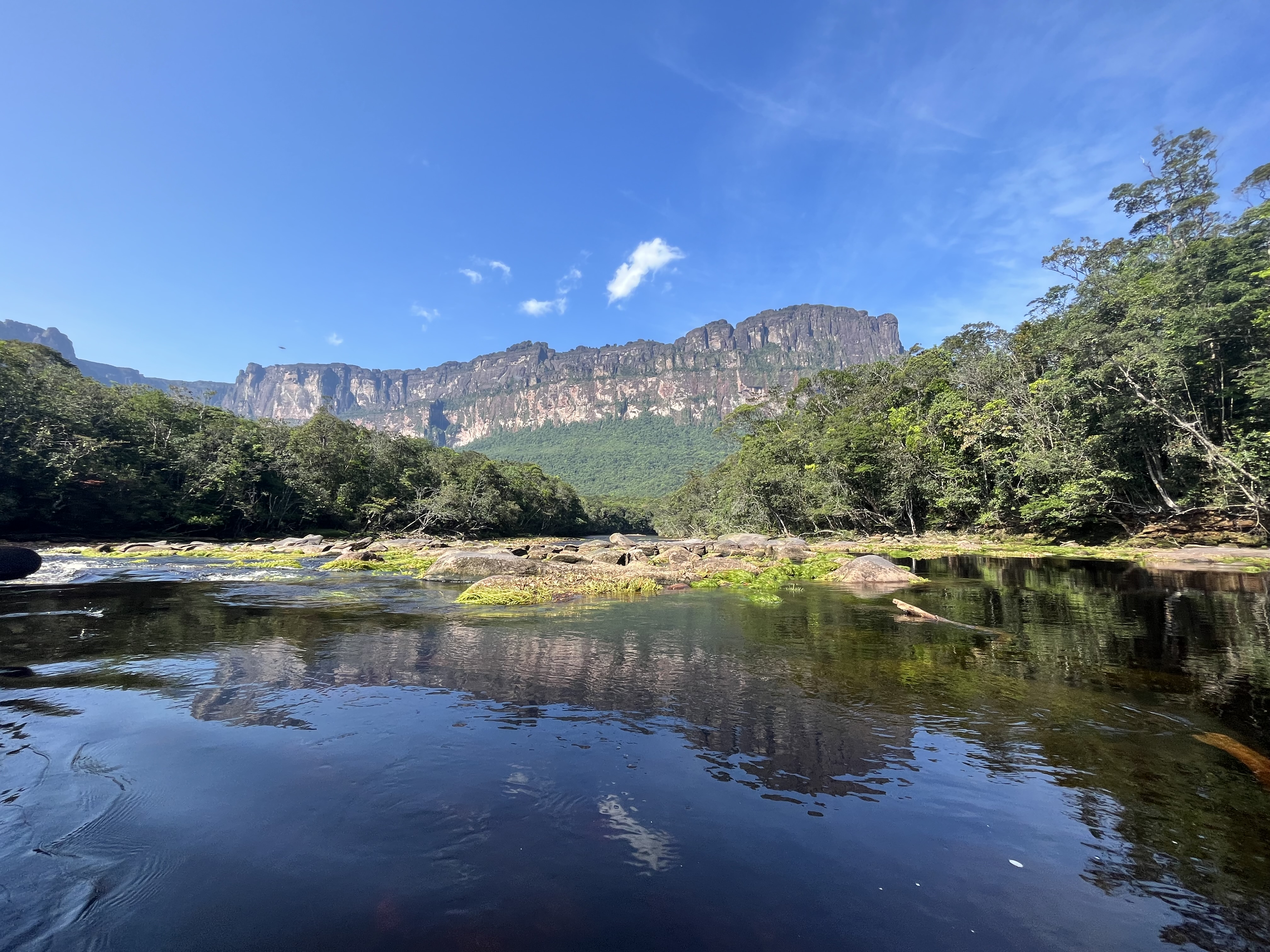
Venezuela sits along the tropical Caribbean coast of South America and from the turquoise waters of Isla Margarita to the lush thick jungles of Amazon to some of the world’s greatest natural wonders Venezuela is an epic destination. Previously Venezuela was viewed as an unsafe destination and due to difficult visa processes for US and Canadians it has often been overlooked as a holiday destination. A shift in government policy after the US intervention in the country has led to relaxed visa laws and now is as good a time as ever to get in and explore before the crowds arrive!
Why visit Venezuela?
Venezuela has some of the most varied landscapes in all of South America with thick jungles, tropical beaches and even freezing cold snow-capped mountains all existing side by side. Venezuela isn’t just natural beauty though, the culture and the people here are warm and friendly and the whole country has a lovely relaxed vibe that only Latin American can really do. There is great nightlife, great fresh food and the cities are safe for tourists to visit.
With the resumption of flights direct from the USA and the introduction of a new e-visa system it is now easier than ever to visit Venezuela and we are sure many people are going to take advantage of this opportunity. Venezuela really has everything, fun, sun and once you’re in the country prices are decent too, especially when compared with other locations in the same area.
How to get a visa for Venezuela?
For many travellers from the UK, European Union, Australia, New Zealand, Russia, Iran, Turkey and many others you do not need a visa to enter Venezuela. For everyone else that needs a visa there is now a new e-visa platform that has been implemented by the Venezuelan government.
To apply for the visa online you can use this website here: https://mppre.gob.ve/
You will need to create an account online and provide them with the following details:
- Confirm that you are a foreign citizen;
- Your country of citizenship;
- Your passport number;
- FBI background check (if you are a US citizen ) translated into Spanish;
- Your email address; and
- Create a secure password
It takes roughly 10-15 days to process the e-visa and currently as of May 2026 there is no fee that is needed to be paid to receive it.
For a step-by-step instruction sheet on how to apply for the visa read our blog: How to Apply for a Venezuelan E-visa in 2026.
Getting into Venezuela – Flights and land borders
The main way most travellers will enter Venezuela will be through Caracas International Airport. This the biggest and best-connected airport in Venezuela and offers flights direct to the USA and Europe and even to Istanbul on Turkish Airlines. The majority of connections are within Latin America to Colombia, Mexico, Panama, Dominican Republic, and Brazil.
By far the easiest and cheapest place to fly from to enter Venezuela is from Bogota Colombia with several airlines flying daily from the Colombian capital. There are also multiple weekly flights from Medellin, Panama City and Mexico City.
There are also three main land border crossings that you can use to enter Venezuela. There are two main border crossings with Colombia near the towns of Maicao and Cucutá (this is by far the busiest crossing). There is one main crossing with Brazil near the town of Saint Elena de Uairén. There are no border crossings with Guyana as there is no road between the two and it is completely covered in thick rainforest. For more information read our blog Guide to Venezuela’s Land Border Crossings .
There used to be a ferry also connecting Venezuela to Trinidad and Tobago, however this service is currently suspended.
Money – Currency and costs
The main currency of Venezuela is the Venezuelan Bolivar (VES). The currency in recent years has experienced very high hyperinflation and in 2018 it reached a high of 1 USD = 4 million Bolivars. The government has sinced slashed zeros off the currency and the rate is now closer to 546 VES to 1 USD.
Due to such high costs with the local currency, the USD is also widely used in Venezuela. When in Venezuela, small notes are like gold! It is especially difficult to break $100 and $50 bills in the country, so it is recommended to bring a lot of $1 and $5 notes for your trip.
One effect of the hyperinflation is a lack of physical local currency. Locals will use a bank card to pay for many things in local currency so they don’t have to carry around huge wads of cash. This is not available to foreigners in Venezuela, so it is advised to plan your expenses using USD cash.
At the current time, ATMs are still not viable for use with foreign cards in the country so all your spending money must be brought in with cash.
Health
There are no mandatory vaccinations needed to enter Venezuela. While there is malaria in the country, the cases of transmission are highly localised and usually within more remote jungle regions with the majority of cases recorded in the State of Bolivar. Cases here are much lower than that of Africa and so there is currently no recommendation to bring anti-malarial medications, unless you plan to spend extended periods of time camping in the amazon. The best way to avoid mosquitos is long clothing, mosquito nets and insect repellent.
Safety
When you hear about Venezuela you may think of high crime rates or oppressive government or other kinds of news that don’t make the average person take an interest in travelling there. We however are different, and the reality of the situation on the ground is also quite a bit different from what you see on the news. Latin America does have a reputation for having more dangerous cities, however we have found in our travels if you follow certain common-sense rules it is quite easy to avoid any trouble. Venezuela overall at the moment we would consider safe for travellers to visit and we would even go as far as to say Caracas is currently safer than the like og Mexico City or Bogotá, Colombia.
Petty crime and robbery is the main thing to be aware of in the country, however as long as you aren’t visiting bad neighbourhoods by yourself or wandering the streets alone drunk and in the middle of the night, then most likely your trip will be worry free! Other things you may have to worry about are dehydration from sweating in the humidity of the Amazon or getting to much sun at one of the amazing beaches. Don’t get us wrong Venezuela is not a Singapore, you should be aware of your surroundings, however, don’t think it is nearly as dangerous as the media would show you. Read our blog Is it Safe to Travel Venezuela in 2026 to get a better insight.
Food
The main star for Venezuela’s cuisine is arepas which we would describe as a sort of corn pancake that is stuff with cheese and other delicious things. It is almost like a pita pocket or a bao bun but made from corn and has a crispy outer layer. This is the quintessential Venezuelan food that you must try in the country.
Other must try dishes are foods like Guasacaca – the Venezuelan answer to guacamole, which is great with a beer! The national dish of the country is Pabellón Criollo and is made up of 4 components, plantains, rice, beans and shredded beef. It’s hearty and very filling, great food giving you energy to see all the tourist sites, or making you want to have a nap.
There are many foods to try in Venezuela that vary throughout the country such as the Caribbean coast having amazing seafood and further in the interior being more famous for its meat. To find out what foods you should be eating, read our blog: 8 Must Try Food of Venezuela .
What are the main sites to see in Venezuela?
Venezuela has a wide variety of landscapes and cities that will cater for all tastes. The Majority of trips will begin in the vibrant capital of Caracas, which is home to 1000s of macaws and a great nightlife and culinary scene.
For the fancy people, you can head out to the island of Margarita for the best of relaxation by the Caribbean coast. For the more adventurous head into the Amazon to see the unmissable Angel Falls (the world’s tallest waterfall) or Mount Roraima which are two wonders of the world that will leave you breathless.
If you’re not a jungle person than you can also visit the snow-capped Andes mountains from the city of Merida, which hosts the world longest cable car. You may not think of Venezuela as a country with snow-capped mountains, however the Venezuela has some very high peaks, with Pico Bolivar reaching just under 5000m above sea level.
Lake Maracaibo is a spectacle to visit as well and is famous for the Catatumbo lighting effect which is said to be the world’s most active lightning storm.
For more information on the top sites and how to plan your Venezuela itinerary check out our blog:
Top 6 Things to See in Venezuela
.
Languages
The official language of Venezuela is Spanish. The Spanish spoken here is said to be fast and a little difficult to understand if you’re not a native speaker. The dialect of Spanish in Venezuela is said to be similar to that of the Canary Islands and does have some variation throughout the country.
If you know basic Spanish you will be fine in the country, but it may take a bit to get used to the accent.
When is the best time to visit Venezuela?
Due to the variation in Venezuela’s landscapes, Venezuela is great all year round. May through November is known as the wet season which locally is called
invierno
. During the wet season temperatures are high humidity is higher and usually means short heavy thunderstorms.
The dry season sees more pleasant temperatures, however due to the proximity to the equator you can expect Venezuela to be humid nearly all year round. Many people choose to visit Venezuela in February for Carnivale which is a great time of year for the weather. The dry season is a great time to visit the Amazon as it makes for much more pleasant hiking when you aren’t completely soaking wet. Rainstorms in the Amazon can occur throughout the year however, so just because you visit in January, doesn’t mean you will be completely dry.
Some cities at higher altitudes such as Merida can get quite cool at night, so it is also suggested to bring a jacket to these areas, especially if you plan to go up the cable car.
How to join a Venezuela tour?
To see this wonderous South American country, the best way will be to join a Saiga Tours Venezuela group tour. You can see our departure dates, here on our website .
To secure your place and sign up to our Venezuela tours, send us an email to [email protected] .