Chaharshanbe Suri refers is the Farsi name of the Persian festival of fire (we think this is a pretty awesome name and not related to the Fyre Festival of the Bahamas). It is held on the last Wednesday before Nowruz which is also known as Persian New Year. Despite the name Persian New Year is Celebrated across other cultures in Central Asia as well, such a Turkmenistan. If you’d like to experience Nowruz in Turkmenistan, check out our tour dates here.
What is the meaning of Chaharshanbe Suri?
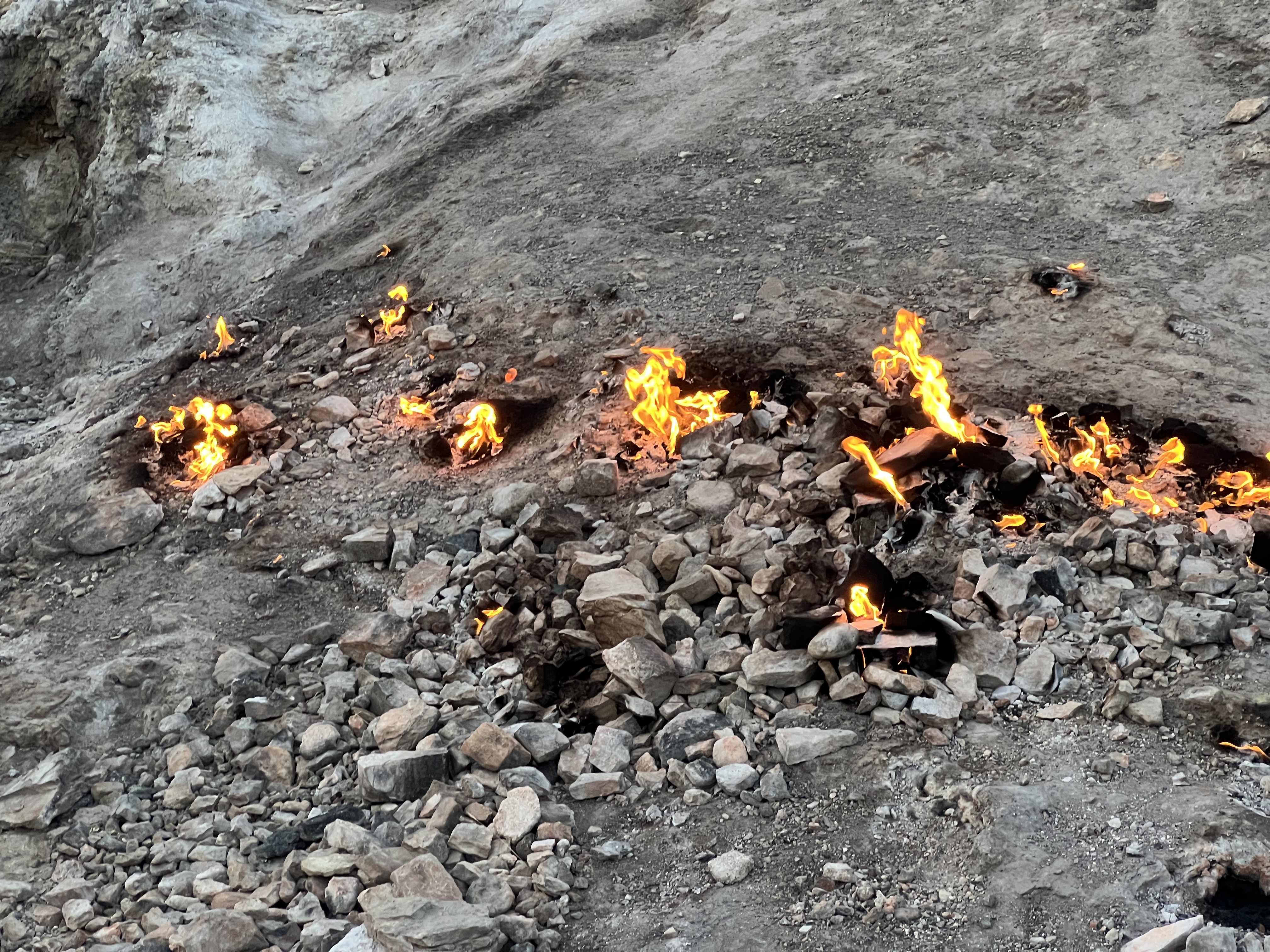
The literal translation of the words are “red Wednesday” or “scarlet Wednesday”. This is in direct reference to the fires that are lit during the celebrations. The festival symbolises purification, renewal and the transition from winter to spring.
The term ‘suri’ is also used to mean “festive and or “ceremonial”.
Charharshanbe simply means Wednesday or the 4 th day of the week. In Persian weekdays are numbered 1-7 starting with Sunday. You may have heard of the capital of Dushanbe which means “Monday” or the second day of the week. This name comes from when there used to be a really big market in the city on Monday.
What are the origins of Chaharshanbe Suri?
Chaharshanbe Suri has its origins in Zoroastrianism which dates back over 2,500 years ago. In Zoroastrianism, fire as well as wind, ground and water are all considered sacred elements. Fire is said to represent light, health and purification.
What do you do on Chaharshanbe Suri?
There are several traditions that take place during the fire festival. Of course, the main one involves (you guessed it) fire!
Fire jumping
Families and friends will build big fires and jump over them to symbolically transfer their sickness, bad luck and paleness to the fire, receiving warmth and health in return. No one is allowed to blow the fire out and symbolically it is left to die out itself which preserves the luck.
Foods
No Persian festival would be complete without amazing Persian food. During the fire festival people will eat a special mix of sweet nuts and dried fruits such as pistachios, almonds, prunes and raisins. This mix is known as Ajil-e Moshkel-gosha. Of course many more amazing special dishes will be served as well, and it is also a special tradition to share these dishes with your neighbours and the poor.
Kuzeh Shekani (breaking the jar)
In many places, people will also engage in a tradition where they break jars by throwing them off rooftops onto the dirt below. Sometimes these jars are filled with salt or coins. The pot is typically lifted and circled around the heads of the family and then the women are tasked with taking up to the roof to be thrown off. Sometimes even barley or other grains were added so that when the pot smashed there was food for birds.
Ghashoq Zani (spoon banging)
Some people will dress up in costumes, typically chadors to hide themselves and then will go to people’s houses and bang spoons on pots asking for sweets, nuts or even money. Kind of similar to trick-or-treating.
Is Iran still Zoroastrian?
While Iran is now predominately a Muslim country, there is a still a sizeable Zoroastrian population, with many more in the Persian diaspora considering themselves Zoroastrian. There are also many Zoroastrian places of worship known as fire temples which are still active in Iran and absolutely should be visited!
Can I go to Iran right now?
As of writing this, due to the US-Iran war it is not advisable to go, however we personally love Iran and will be heading back as soon as it’s safe to do so. Iran is a beautiful country filled with a rich culture and amazing people and should absolutely be on everyone’s bucket list. Check out our Iran tours here to see our next departure dates.
Want to know more on Iran?
Check out our in-depth destination guides on the country available on our website.
How can I secure my place on a Saiga tour?
To join us in any of our destinations (including hopefully Iran in the near future), send us an email to [email protected] .