Libyan food doesn't get talked about nearly as much as its neighbours' cuisines, but it deserves to. It sits at a genuinely interesting crossroads: North African and Bedouin cooking at its base, a strong Mediterranean seafood tradition along the coast, and a distinct Italian influence left over from the colonial period, most visible in Tripoli. If you're planning a trip, it's worth reading our guide to travelling to Libya alongside this one, since food is one of the more unexpectedly good reasons to visit.
What Is the National Dish of Libya?
If any single dish can claim that title, it's bazin — an unleavened bread made by boiling barley flour with water and salt, then beaten into a firm dough with a special stick called a magraf. It's shaped into a dome, sits at the centre of a large communal plate, and is surrounded by a tomato-based lamb stew, potatoes and hard-boiled eggs, meant to be eaten by hand and shared among the table. It's not the easiest introduction to Libyan food for a first-time visitor, but it's the one dish worth actively seeking out if you want to understand what Libyans themselves consider proper home cooking.
Five More Dishes Worth Trying in Libya
- Sharba Libiya — a rich, warming soup made from lamb, tomato paste and a distinctive blend of spices, often thickened with pasta or rice. It's ubiquitous during Ramadan, when it's traditionally the dish used to break the fast, but it's served year-round too and is a good, approachable starting point if you want to try Libyan food without committing to a full meal.
- Usban — a Libyan sausage made from stuffed intestine, filled with rice, herbs and organ meat. It's a specialty across the wider Maghreb, usually reserved for special occasions, and is one for more adventurous eaters, but it's a genuine point of pride in Libyan home cooking.
- Couscous bil bosla — Libya's take on the North African staple, combining couscous with chickpeas, potatoes, tomatoes and lamb or beef, flavoured with onions, butter and chilli. Couscous shows up across the region, but the Libyan version leans spicier and heartier than most.
- Mbatten — thin potato slices wrapped around spiced minced meat, then deep-fried until crisp. A close pastry-based cousin, also called mbatten in some households, swaps the potato casing for filo-style pastry filled with meat or tuna. Either version turns up regularly as a starter or snack.
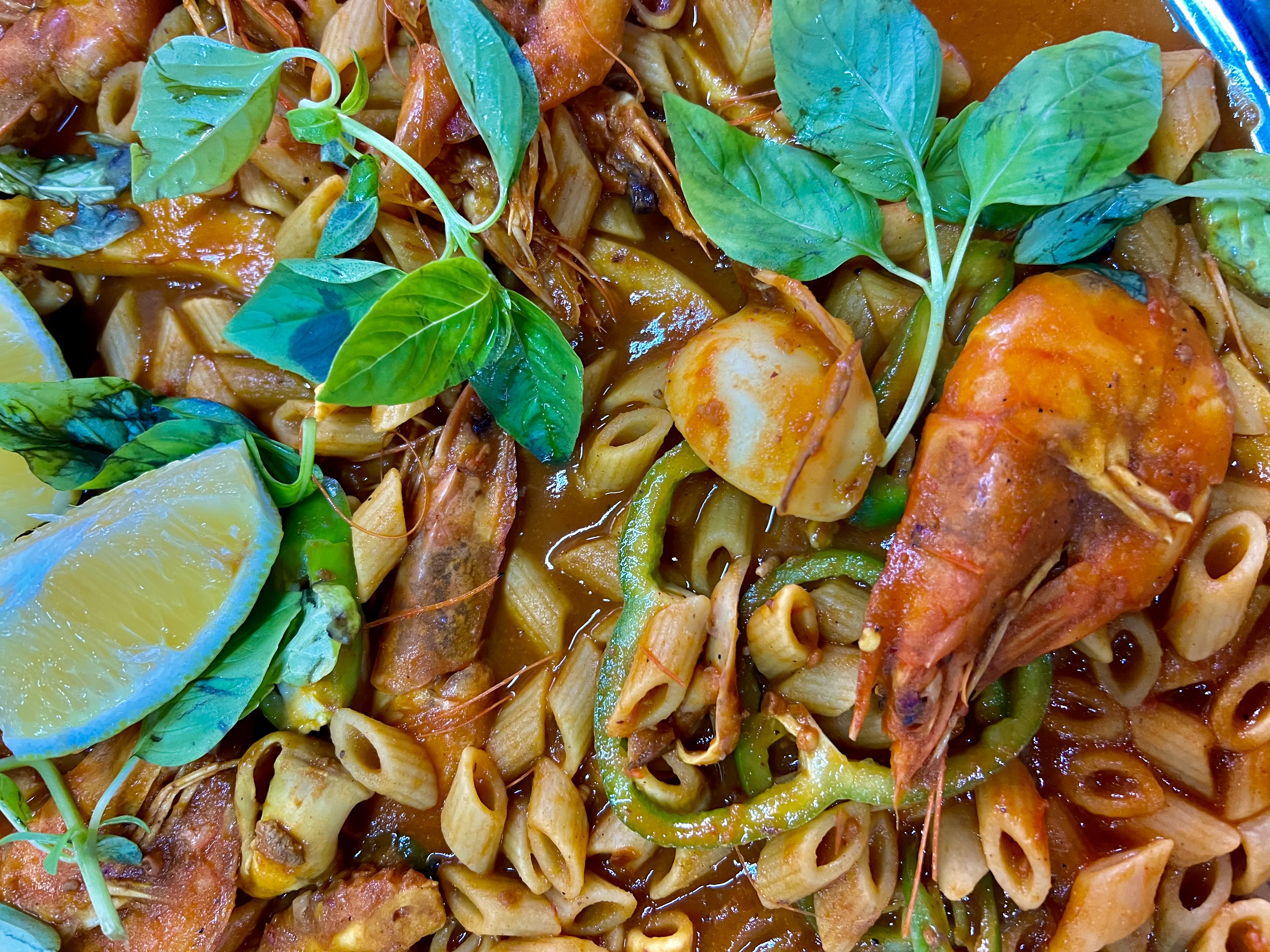
- Imbakbaka — a spiced, one-pot pasta dish and one of the clearest examples of Italian influence on Libyan cooking, built around pasta simmered in a tomato and meat sauce with warming spices mixed in. It's comfort food, and a good sign of how thoroughly Italian staples got adopted and reworked into something distinctly Libyan.
Tea Culture in Libya
Tea, known locally as shai, is central to Libyan hospitality, and you'll be offered it constantly, whether you're in someone's home, a shop, or just sitting down for a rest. It's brewed strong, served intensely sweet, and often flavoured with fresh mint or, in some households, peanuts. The presentation matters as much as the taste: tea is poured from cup to cup, held far apart, to build up a thick foam on top known as reghwa. In more rural areas, the whole pouring ritual can take a genuinely long time, and it's treated as much as a social occasion as a drink — turning it down isn't really an option, so budget the time for it.
Italian Influence on Libyan Food
Libya's period as an Italian colony left a lasting mark on food along the coast, Tripoli especially. Espresso and cappuccino culture has stuck around, and you'll find genuinely good coffee in the capital as a result. Pasta dishes like imbakbaka show the same influence in a more adapted form, and seafood, olive oil and fresh herbs all feature more heavily in coastal cooking than in the more Bedouin-influenced dishes found further inland and south.
Drinking in Libya
Libya is a dry country, and alcohol is illegal, so don't expect it on any menu or at any hotel bar. It's not something that catches most visitors off guard, but it's worth knowing in advance so you're not caught out planning an evening around it. We've covered this along with other etiquette points in our Dos and Don'ts of Traveling to Libya , which is worth reading alongside this guide.
Where to Eat in Libya
Tripoli has the widest range of dining, from simple, excellent seafood restaurants along the coast to Italian-influenced cafés serving proper espresso. Outside the capital, food is generally simpler and more home-style, and smaller towns and oasis settlements like Ghadames are a good place to try bazin and other traditional dishes cooked the way they've always been made. If you're travelling with us on an overland route, our guide to crossing Libya's land borders is worth a read too, since it covers some of what to expect once you're actually in the country.
Libyan food isn't well known outside the region, but that's exactly what makes it worth trying — a genuinely distinct cuisine, shaped by Bedouin tradition, Mediterranean geography, and an unlikely Italian legacy, that most visitors have never had the chance to sample before.
Do we offer Libya tours?
Yes — take a look at our Libya tours for what's currently running.
How can I book a tour?
Send us an email at [email protected] and we'll help you plan your trip.