Mali is a West African nation steeped in ancient empires, desert mysteries, and colourful traditions. Forget the basics like its size or the origin of the Niger River — here’s a collection of the 10 strangest facts that highlight its bizarre rituals, architectural wonders, and cultural quirks.
1. Mali is home to the Dogon People’s Extraterrestrial Knowledge
The Dogon people of the Bandiagara Escarpment have long claimed to possess detailed astronomical knowledge about the Sirius star system, including Sirius B — a white dwarf star invisible to the naked eye. They described it centuries before Western telescopes confirmed its existence, claiming this wisdom came from amphibious beings called the Nommo who visited from space.
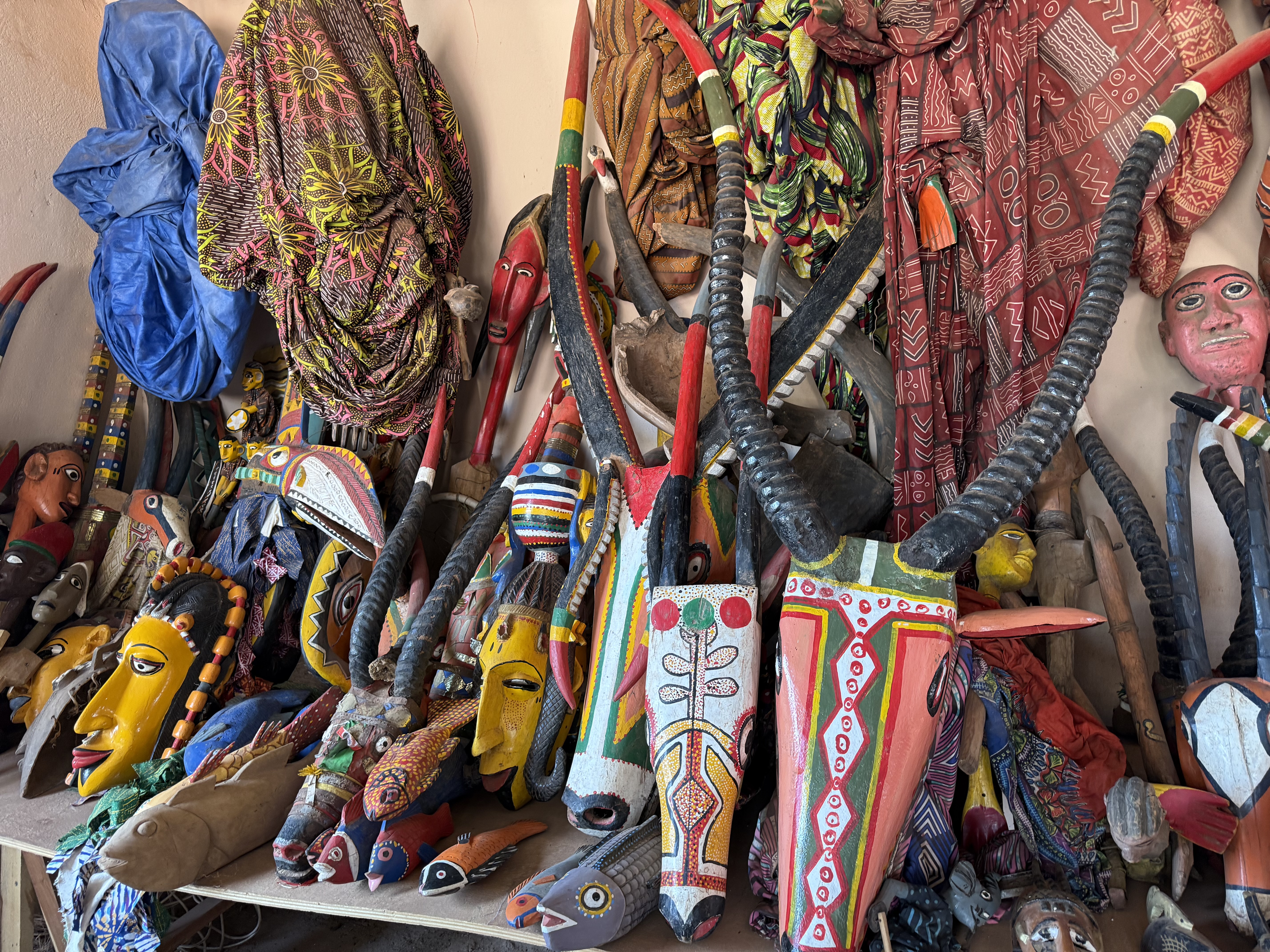
The Sigui festival celebrates this cosmic knowledge with elaborate masks and rituals.
2. Mali is home to the World’s Largest Mud-Brick Building and it gets a yearly makeover
The Great Mosque of Djenné is the largest mud-brick structure on Earth. Built (and rebuilt) entirely from adobe (a traditional mud brick using straw), it requires an annual community festival called Crepissage, where thousands of people plaster fresh mud onto the walls to maintain it. This massive cooperative event turns maintenance into a celebration.
3. The Insane Antogo Fishing Frenzy
Once a year in the Dogon region, a sacred lake (Antogo) opens for fishing. Hundreds of men charge into the shrinking desert lake in a chaotic 15-minute frenzy, grabbing fish with their bare hands amid total pandemonium. Women are traditionally banned, and the ritual honours ancestors while providing a rare food source.
4. Elaborate Masks That House the Dead
Dogon funeral rites involve intricate wooden masks worn in dances to guide spirits. When a person dies, their life force is believed to enter a mask. Some rituals historically included leaving bodies exposed or complex practices tied to ancestor veneration that outsiders often find eerie.
5. Mali incorporates Gender Segregation even in its architecture
Traditional Malian homes and mosques use mud, straw, and dung. Many incorporate specific gendered designs — separate granaries for men and women, menstrual huts on village edges, and structures built to stay cool in extreme heat. Timbuktu’s buildings even involved rituals and sacrifices before construction to appease spirits.
6. Joking Cousins and Social Chaos Bonds
Mali has a deep cultural tradition called sanankuya (joking kinship). Certain ethnic or family groups are “joking cousins” and can insult each other freely — even obscenely — without causing offense. This ritualized banter helps maintain social harmony across groups.
7. Mali is home to the famous Timbuktu
As a child, when you wanted to say somewhere was so remote there was a chance it didn’t exist, you would say Timbuktu. Well it does exist and it’s in Mali.
Timbuktu was once home to one of the world’s wealthiest men (Mansa Musa) and a major centre of learning with hundreds of thousands of ancient manuscripts. Many were hidden in homes during conflicts to protect this intellectual heritage, some containing bizarre or esoteric knowledge.
8. In Mali there is a caste called Griots. These people are Living Libraries who can’t marry outsiders
Griots are hereditary musician-storytellers who memorize centuries of history, genealogy, and gossip. They form a caste that’s both revered and restricted — they often cannot marry outside their group, and their words carry immense social power (and sometimes supernatural weight).
9. Mali is home to Cliffside Villages That Defy Gravity
The Dogon built villages directly into the Bandiagara cliffs with granaries and homes that seem impossible to access. Some structures were traditionally used for specific rituals, including isolation during menstruation or storing sacred objects.
10. Until Recently One of the Few African Countries Without Anti-Homosexuality Laws
For decades after independence, Mali had no specific laws criminalizing homosexuality (unlike many neighbours). This changed in late 2024 with a new penal code under the military government. It’s a relatively recent shift in a country long known for complex social tolerances in other areas. The reality on the ground still may not reflect this but on paper there has been a change at least.
A trip to Mali requires careful planning and respect for safety at all times. We recommend joining a group tour to explore where is currently possible in this amazing country. See our
Mali Group Tour dates
here.