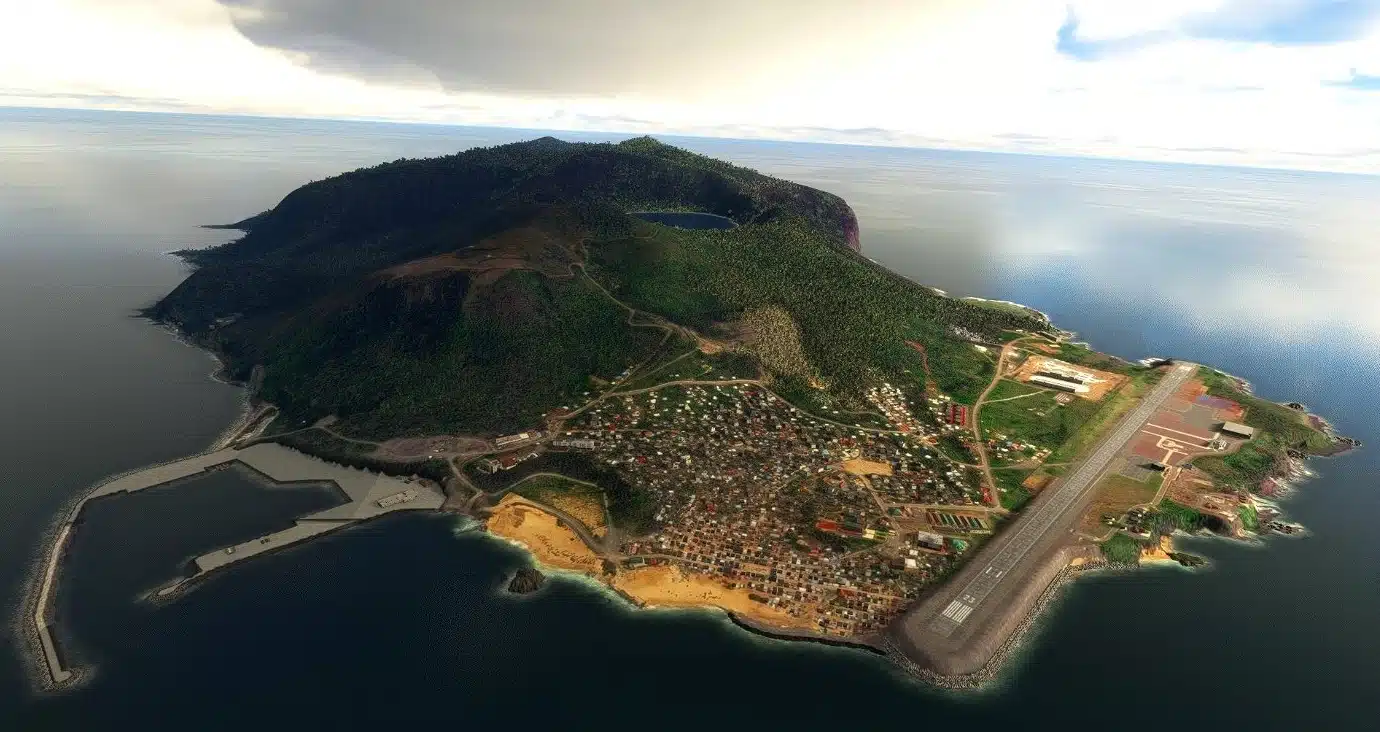
Imagine a tiny island in the middle of the ocean. It is so small that you could walk around it in a day. It’s an Island that makes Nauru look huge! This island is Annobón. It has green hills, a big lake in a volcano crater, and beaches with crystal clear water. About 5,000 people live there. They speak a special language which is a blend of English, Portuguese and their own native dialects, and have their own ways of life.
The strange part about Annobón is that it is part of Equatorial Guinea, despite a large geographical difference and another country in between them. The mainland of Equatorial Guinea is over 600 kilometres to the north. Yet, São Tomé and Príncipe is much closer, just 180 kilometres away and they both have Portuguese heritage. So why is Annobón not part of it? It seems like a mix-up.
Firstly, let's look at where Annobón is. It is in the Atlantic Ocean, in the Gulf of Guinea. The island is very small, only 17 square kilometres. That is smaller than many cities. The island is an extinct volcano, part of the Cameroon chain. The highest point is Quioveo, about 600 meters tall. In the middle, there is a lake called Lago Mazafin. It sits in the crater, like a big bowl of water. The island has thick forests abundant in baobabs and ceiba. These trees are special – the ceiba is used to make boats. For animals, Annobón is like a secret zoo. It has birds found nowhere else, like the Annobón white-eye, the paradise flycatcher, and the scops owl. There are also bats, snakes, and lizards that are unique to the island. Sea turtles come to lay eggs on the beaches.
The people of Annobón are called Annobonese. They come from a mix of Portuguese, African, and some Spanish backgrounds. Most came from Angola as slaves long ago. They speak Fa d'Ambu, a creole language based on Portuguese, closely related to the creole that they speak in São Tomé and Príncipe. Spanish is the official language because of Equatorial Guinea, but people use Fa d'Ambu at home. Portuguese is used in church. Almost everyone is Roman Catholic, but they mix in old African beliefs. For example, they have festivals with dances and music that tell stories from the past. There is one school, a small airport, and a port. Electricity comes from solar panels and generators, but it is not always on. A ferry comes once a week from the mainland, but ships are rare with locals waiting months for deliveries. There is a single hotel for tourists, but not many visitors come.
So why is this island a part of Equatorial Guinea? Portuguese explorers found Annobón on New Year's Day in 1473. They called it Ano Bom, which means "Good Year" in Portuguese. When first discovered Annobon was uninhabited with no evidence of previous indigenous populations. The Portuguese started bringing slaves from Angola (also then a Portuguese colony) through São Tomé (also a Portuguese colony at the time) to work on farms. For over 300 years, it was controlled by Portugal, just like São Tomé and Príncipe. The islands were close and local populations moved between them.
But in 1778, everything changed. Portugal and Spain signed a treaty called the Treaty of El Pardo. As part of the treaty Portugal gave Annobón and another island called Bioko (where the capital of Equatorial Guinea, Malabo, is located) to Spain. In return, Spain let Portugal keep more land in Brazil. Why? Both countries wanted better spots for trade and slaves. Spain needed places in Africa, and Portugal loved Brazil. So, Annobón switched hands overnight. When Spanish ships came, the people fought back. Local folklore states that the Annobonese saw the Spanish flag with lions but thought they were dogs. Dogs being evil in their beliefs, they threw the Spanish into the sea! The Spanish left, and the islanders ruled themselves for almost 100 years. Five local leaders took turns being in charge.
Later, in 1801, the British came and built a fort to stop slave ships. They rented the land from Spain but did not interfere with the self-governing local population. Then, in the late 1800s, Spain took full control again. Annobón became part of Spanish Guinea, with Bioko and the mainland. When Spain left in 1968, it all became Equatorial Guinea. São Tomé and Príncipe stayed with Portugal until 1975, when they got free on their own. So, that old treaty kept Annobón separate.
Today, there is an uneasy relationship between this far-flung island and the central government. The island feels far from the government in Malabo. People say they are treated badly, like second-class citizens. In 1993, they rebelled again, attacking the governor's house. The government sent soldiers, and some people were killed. There were more troubles in recent years. In 2022, some leaders started a group called Ambô Legadu for independence. They even joined a group for unrepresented peoples in 2024. And get this: In 2025, they asked to join Argentina! Argentina can be a beautiful country, but no one would disagree that Argentina currently has its fair share of problems, but it shows how unhappy they are.
Equatorial Guinea keeps Annobón because it helps claim big ocean areas for oil. Oil is big money there – over 80% of the economy. Even if no oil is drilled yet, it is important.
So why not join São Tomé and Príncipe? They are closer and share the same roots. People speak similar creoles, eat the same fish, and dance to the same beats. The 1778 Treaty of El Pardo locked it in. If not for that, Annobón might be part of São Tomé today. It would make more sense geographically, culturally and linguistically. But borders are often silly, drawn by far-away rulers who never set foot in the place they were trading.
Annobón is a gem, full of nature and stories. Now, it is protected as a wetland. If you go, expect friendly folks, fresh fish, and hikes to the crater. But pack patience – getting there is an adventure. This little island teaches us that history can be weird. Who knows what is next? Maybe independence, or a tango with Argentina. Whatever happens, Annobón stays special.
If you're thinking of going to Equatorial Guinea, check out our Equatorial Group tour dates on our website here.