Getting in and out
Air
The main airport in Benin is Cardinal Bernadin Gartin International Airport, located in Cotonou, the largest city in Benin. This is the main hub that serves the surrounding region as well as other airports in Africa such as Casablanca and Addis Ababa and also routes to Europe such as Paris (CDG).
Train
Benin does not currently share rail links with its neighbouring countries, however there are three lines planned, with the line connecting it to Niger already under construction.
Land Borders
Benin shares land borders with Togo, Burkina Faso, Niger and Nigeria, all of which have open borders. It is suggested due to safety that if you plan on travelling overland you only use the land borders with Togo and Nigeria as border regions with Burkina Faso and Niger are considered too dangerous for foreigners at this time (April 2026).
Sea
It is possible to get a boat from Lagos to Benin, and while technically not by sea as it travels by river, it can be a fun way to enter the country if you find yourself in Nigeria.
See and Do
Ouidah
Ouidah is considered the heartland of the voodoo religions in Benin and is still today an important religious centre. Many people come here to witness voodoo traditions and visit places of special religious significance, such as the Python Temple.
Ganvie
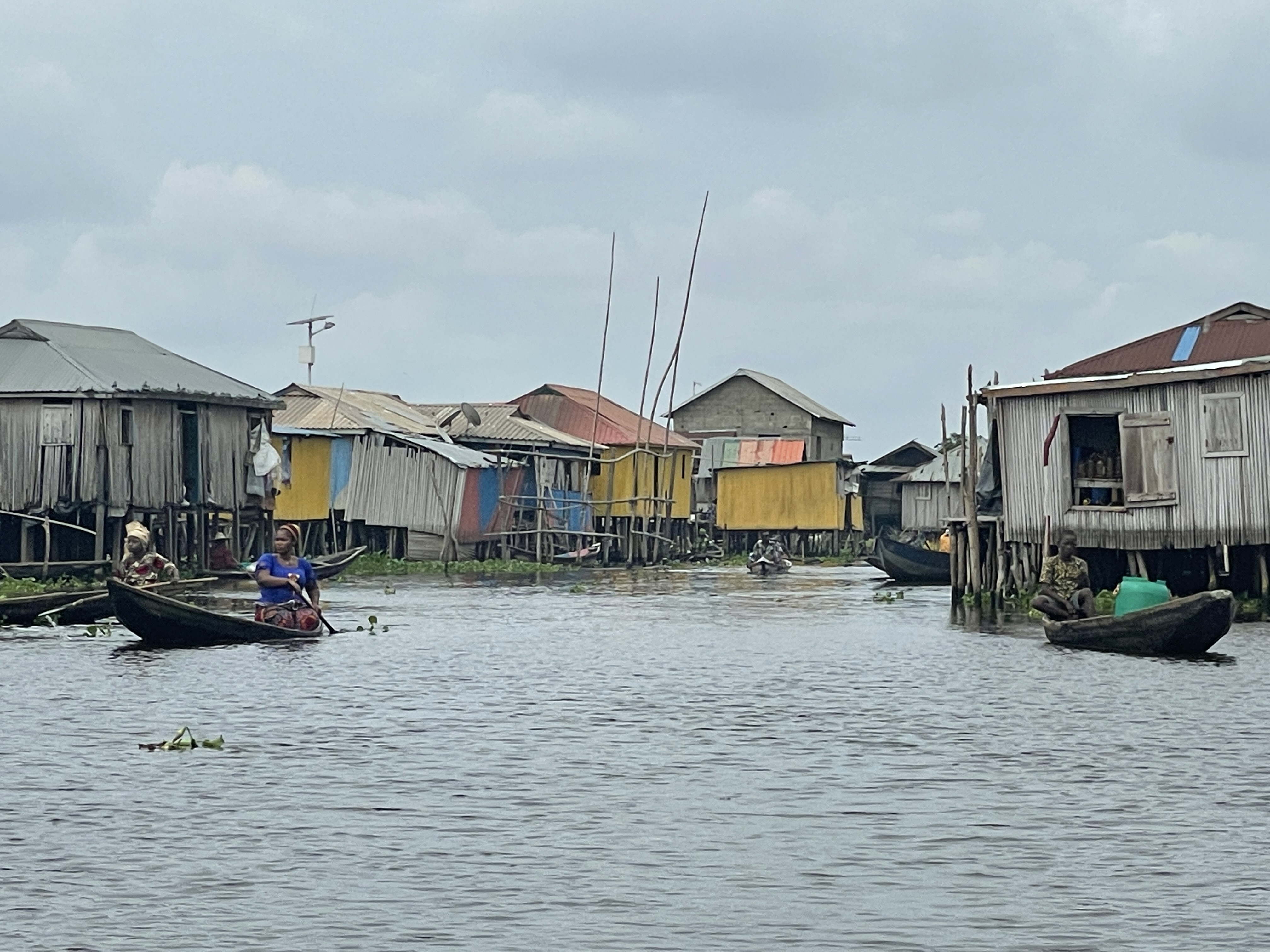
Ganvie is considered one of the largest floating villages in all of West Africa and maybe even all of Africa and is located on the northern shores of Lake Nokoue. Approximately 20,000 people live here today and is a great spot to check out.
Grand Popo
Grand Popo is the long stretch of beach leading toward the border with Togo. This area is where locals go to unwind on the weekend and is great for relaxing. This is also where you can go to see the Refuge Des Tourtues (Turtle Refuge Centre) that helps keep turtle numbers healthy in the region. This place gets quite busy on weekends with locals so you may want to visit on a weekday.
Abomey
Abomey is the centre of what was the Kingdom of Dahomey. One of the coolest things to see here is the Temple Caméléon (Chameleon Temple), which is an awesome stone building shaped like (you guessed it) a Chameleon.
Pendjari National Park
Located in the north of the country is one of the best places to see wildlife in Benin and hosts one of Africa’s largest populations of wild forest elephants.
W National Park
The W National Park gets its name from the W-shaped river that flows through it. This park traverses Benin, Burkina Faso and Niger and is an important refuge for many rare and endangered animals in West Africa. W Park is said to be home to one of the remaining populations of West African cheetahs who number as low as only 25 animals.
Dress code
There are no enforced dress codes in Benin. Local people tend to wear long trousers/pants and a short sleeved shirt for men, and women tend to where a dress usually with local patterns. You will want to dress for hot humid weather so shorts and a t-shirt will be fine. You may want to wear long trousers/pants at night as an extra precaution against mosquitos.
Topics of discussion
There isn’t really anything off limits in Benin to talk about, however it is always a good idea to be wary of controversial topics such as religion, homosexuality and security.
Religion
Benin is roughly 50% Christian, 25% Muslim and the remainder is considered Animist or followers of Voudon (the origin of Voodoo in the Caribbean). Many people, while Christian or Muslim, will also have a very strong influence from West African Voudon practices.
To read more about West African Voudon (Voodoo) check out our blog here.
Ethnicity
There are more than 40 distinct groups in Benin. Of these the main dominant group is the Fon (roughly 38%) in the south and central region near the old Kingdom of Dahomey and the Abomey area. Others are the Adja and Mina (15%), Yoruba (12-18%) and the Bariba and Fula (10%). The Bariba and Fula (also known as Fulani) populate the northern edge of the country closer to Burkina Faso and Niger.
Photography
It is no problem taking photos in Benin, however just as with many other places in West Africa, and the world in general, you should avoid taking photos of government buildings. And as always, like in most places, just remember locals are people, so it's usually a good idea to ask people before taking pictures of them.
Asking for permission to take photos is very important in general in West Africa as locals can get very upset if they think you are taking a photo of them without their permission.