Nowhere else on earth packs in quite this much contrast. In one trip you can stand at the base of the world's second-highest mountain, wander the salt-carved tunnels of one of the largest mines on the planet, eat some of the best food in Asia, and watch a border-closing ceremony that's half military parade, half football match. Pakistan is one of those countries that completely upends whatever you thought you knew about it before you arrived.
We'd put it simply: if you love the mountains of Central Asia, the history of the Middle East and the warmth of South Asian hospitality, Pakistan gives you all three in one place — and it's still years away from the crowds you'll find in more established destinations nearby. It's also one of the fastest-growing destinations in the region, with international arrivals climbing sharply over the past couple of years as more travellers realise what they've been missing.
This guide pulls together everything we've learned from running trips there, plus links to our deeper dives into specific topics if you want to go further down the rabbit hole on any one of them.
How to Get a Visa for Pakistan?
Almost every nationality needs a visa, applied for online through the official Pakistan Online Visa System (POVS). Until the end of 2025, travellers from 126 countries could enter under a free Visa Prior to Arrival (VPA) scheme — but that was suspended on January 1, 2026, and everyone from those countries now needs to apply for a standard, paid e-Visa instead, same as everybody else.
The application itself is straightforward:
- Create an account on the Pakistan Online Visa System (POVS).
- Fill in your personal and passport details.
- Upload a passport-style photo and proof of a hotel booking.
- Use the built-in fee calculator to check your visa cost, based on your nationality.
- Pay the visa fee online by Visa or Mastercard.
- Submit your application and track its status through your account.
You don't need a Letter of Invitation for a standard tourist e-Visa — the government's own document checklist only asks for proof of accommodation. If your application gets sent back for review, usually over a document issue or an unclear photo, you'll need to resubmit within 7 days or it's automatically cancelled, with the processing clock restarting from scratch once you do. Getting your documents right the first time is the easiest way to avoid the delay.
The fee isn't a flat rate — it depends on your nationality and is calculated through the fee calculator built into the online system. Processing officially takes a few days, but we'd always recommend applying well ahead of your trip, since real-world processing times can run longer than the official estimate, especially in peak season.
We’ve written a full, step-by-step breakdown of the whole process, including exactly what to do if your application gets sent back for review: How to Get a Pakistan e-Visa (2026 Update) .
Getting Into Pakistan — Flights and Land Borders
Most travellers fly in — Islamabad, Karachi and Lahore are the main international gateways, with onward domestic connections to Gilgit, Skardu and Peshawar if you’re heading up into the north. Domestic flights are cheap and cut out what would otherwise be a very long drive, so they’re worth building into your itinerary if time is tight.
Overland is also very possible, and increasingly popular with travellers stitching Pakistan into a longer regional trip. The most established crossing is the Wagah border with India, right outside Lahore, famous for its daily flag-lowering ceremony. On the other side, the Torkham and Chaman crossings connect to Afghanistan, and it’s now possible to cross from Iran via Taftan. The old Karakoram Highway crossing from China at the Khunjerab Pass is also open again seasonally, weather and politics permitting, and it’s one of the most spectacular border crossings anywhere in the world.
Each of these crossings has its own quirks — paperwork, opening hours, and how straightforward it is can all vary a lot depending on the current political situation, so it’s worth checking close to your travel dates rather than relying on older information.
We’ve put together the up-to-date rundown here: A Guide to Crossing Pakistan's Land Borders (2026) .
Money — Currency and Costs
The currency is the Pakistani Rupee (PKR), in use since 1948 and named after the Sanskrit word for a silver coin. Notes run from Rs. 10 up to Rs. 5,000, and you’ll want a mix of denominations, since smaller notes are genuinely useful for tips, street food and small shops.
Pakistan still leans cash-heavy outside the big cities, so carry rupees for markets, street food and smaller guesthouses — card payments are increasingly common in Islamabad, Karachi and Lahore, but don’t rely on them once you’re out in the regions. ATMs are widely available in cities and larger towns, less so in the mountains, so stock up before heading into places like Hunza or Skardu.
Tipping isn’t obligatory but is appreciated and increasingly expected in tourist-facing services — guides, drivers and hotel staff. A modest tip goes a long way and is a normal part of how we structure our tours.
Overall, Pakistan is excellent value. A comfortable daily budget covering food, transport and mid-range accommodation is a fraction of what the same trip would cost in most of Europe or North America, and the further you get from the main cities, the further your money stretches.
Health
No vaccinations are legally required to enter Pakistan, though if you’re staying more than four weeks or heading to certain regions, a polio booster is worth checking given Pakistan is one of the last countries where the disease is still endemic. Hepatitis A and Typhoid are commonly recommended for any traveller, given they’re both food and water borne. As always, we’d suggest checking with a travel clinic or your doctor four to six weeks before you fly, since recommendations can vary depending on where exactly you’re headed and how long you’re staying.
Tap water isn’t safe to drink anywhere in the country, so stick to bottled or filtered water, and be sensible with street food — that said, some of the best meals we’ve had in Pakistan have come from small roadside stalls, so we wouldn’t tell you to avoid it altogether, just use common sense and go where there’s a steady stream of local customers.
Travel insurance that covers your full itinerary, including any high-altitude regions if you’re heading into the north, is essential — make sure it’s arranged before you go, and that it explicitly covers the areas and altitudes you’ll be travelling through.
Is Pakistan Safe to Travel?
Despite what you might hear in the news, Pakistan is genuinely safe to travel in — and it’s the single biggest misconception we have to talk people through. If you’re heading to the main tourist areas — Islamabad, Gilgit-Baltistan and Lahore — the thing you’ll actually have to worry about is traffic or an upset stomach, not crime. Crimes against tourists are rare, and common sense goes a long way.
There have been isolated attacks in recent years, mainly in Balochistan and Khyber Pakhtunkhwa (KPK), and less often in Karachi. None of these have targeted foreign tourists, and they remain very isolated events. These areas are still safe to travel through — we go to them regularly on our tours — but there are some extra steps involved. If you travel anywhere inside KPK or Balochistan, you’ll pick up an armed escort: as soon as you cross into either province, soldiers will follow you to your destination. In our experience they’re relaxed and friendly, and it tends to make for a memorable part of the trip rather than a tense one — they’ll often let you take photos with them too.
A few practical habits go a long way: register with your embassy before you travel if that’s an option for your nationality, keep copies of your documents separate from the originals, and check the latest advisories for your specific route shortly before you fly rather than relying on older information.
We’ve written a full breakdown of the safety picture, region by region: Is Pakistan Safe to Travel? (2026 Update) .
Food
Pakistani food deserves a trip of its own — a mix of South, Central and West Asian influences, with rich curries, slow-cooked meats and some of the best bread in the world. Expect a lot of variation as you move around the country too: Lahori food leans rich and buttery, Peshawar is all about slow-roasted meat, and the food in the north has more in common with Central Asian cuisine than anything further south.
A few things worth seeking out: nihari (a slow-cooked beef stew traditionally eaten for breakfast), karahi (a meat curry cooked and served in the pan it’s made in), and Peshawari chapli kebab, a spiced minced meat patty that’s one of the best street foods anywhere in Asia. Wash it all down with doodh patti, a strong, milky tea that’s everywhere once you know to look for it.
We’ve written up our full list of the dishes worth building a trip around: Top 10 Foods You Have to Try in Pakistan .
What Are the Main Sites to See in Pakistan?
From Hunza Valley’s terraced apricot orchards to the ancient streets of Mohenjo-daro, Pakistan’s highlights span thousands of years of history and some of the most dramatic mountain scenery on earth. Northern Pakistan alone is worth a trip of its own — Hunza, Skardu and the Karakoram Highway put you among some of the highest peaks in the world, including K2.
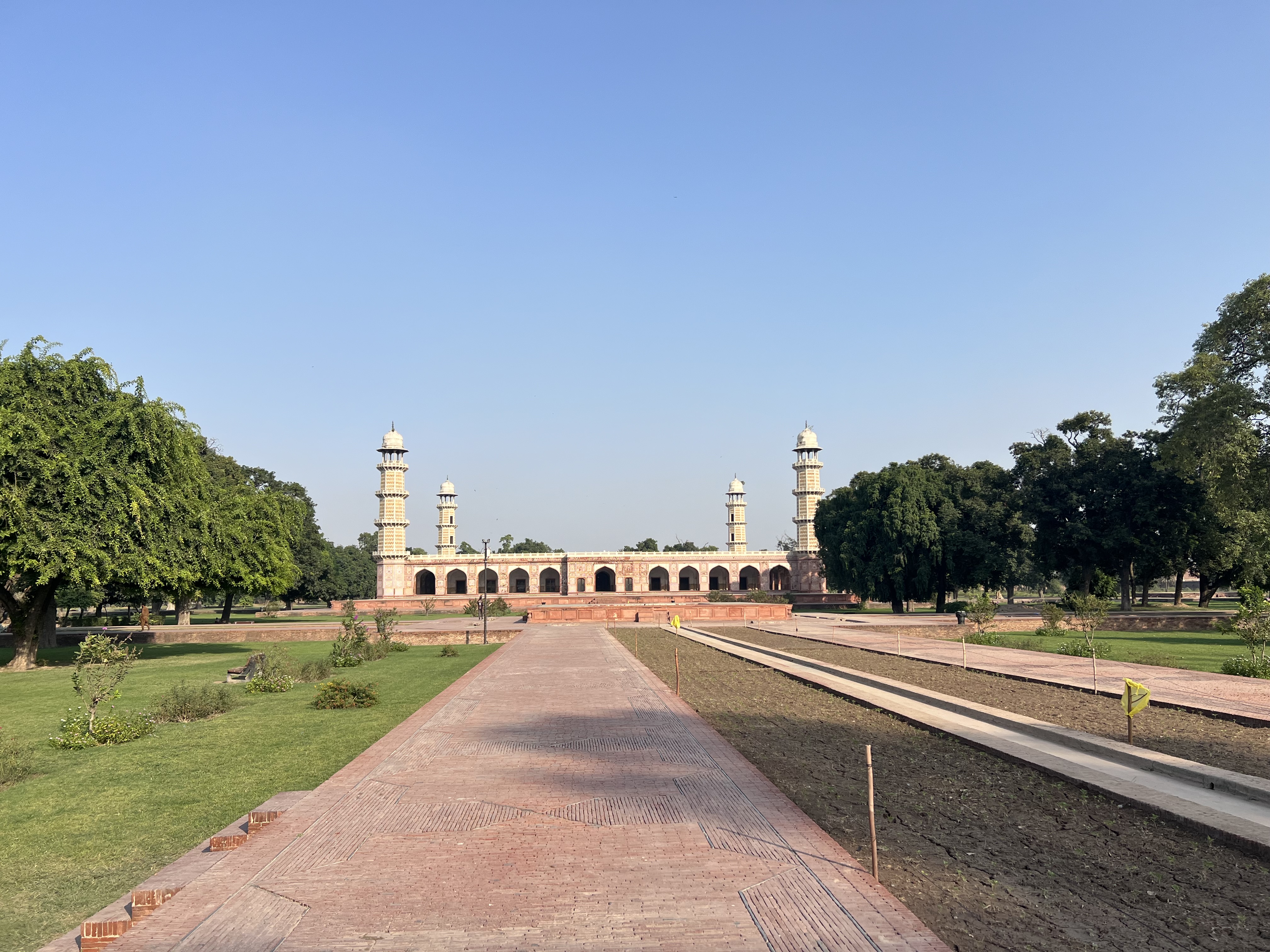
Down in the cities, don’t miss the Badshahi Mosque and the walled old city of Lahore, the Faisal Mosque in Islamabad, and the Wagah border ceremony just outside Lahore — a daily, theatrical flag-lowering routine between Indian and Pakistani border guards that has to be seen to be believed. History buffs should make time for Mohenjo-daro, one of the best-preserved cities of the Indus Valley Civilisation and one of the oldest urban settlements on the planet, and the Khewra Salt Mine, the second-largest salt mine in the world, with tunnels and buildings carved directly out of the rock.
We’ve picked out our full top 10, with everything you need to plan around them: Top 10 Sites to See in Pakistan .
Languages
Urdu is the national language and is widely understood across the whole country, especially in government, education and media, even though it’s actually the first language of a fairly small percentage of the population. Depending where you’re travelling, you’ll also hear Punjabi, Pashto, Sindhi, Balochi and Saraiki, among dozens of smaller regional languages — Pakistan is genuinely one of the most linguistically diverse countries in the world.
English is widely spoken in cities and tourist areas, and is actually an official language alongside Urdu, so you won’t struggle to get by. That said, learning a handful of Urdu phrases — even just salam (hello) and shukriya (thank you) — goes a long way with locals, and it’s the kind of thing that consistently gets you a warmer welcome.
What to Pack for Pakistan
Pack in layers — temperatures can swing a lot between the plains and the mountains, and even within a single day if you’re up in the north. Loose, modest clothing goes down well pretty much everywhere, and it’s worth having a proper scarf or shawl on hand for visiting mosques and shrines.
If you’re heading into the northern regions, bring proper hiking boots, a warm jacket and thermals even outside of winter — nights get cold fast at altitude. A power bank and a universal adapter are worth having too, since power cuts aren’t unusual outside the main cities. And bring more cash than you think you’ll need, in small denominations — card machines are still rare once you’re off the main tourist trail.
When Is the Best Time to Visit Pakistan?
October and November are the sweet spot for most of the country — clear skies, moderate temperatures, and the summer monsoon well out of the way. Spring, from March to April, is also excellent, particularly if you want to catch the cherry and almond blossoms in the north.
Summer (June to August) is when the northern mountain regions come into their own — it’s the only time some of the high passes are reliably open — but the lowland cities get brutally hot and humid, so plan your time in Lahore, Islamabad and Karachi accordingly. Winter brings snow to the north, closing off a lot of the mountain regions, but it’s a great time to focus a trip on the cities and the south instead.
Worth building a trip around: the Shandur Polo Festival in July, held at the highest polo ground in the world, and Independence Day celebrations on the 14th of August, when the whole country turns out in green and white.
Pakistan is one of the most rewarding, most misunderstood countries we run trips to — and one of the easiest to fall in love with once you’re actually there. Whether it’s the mountains, the history, the food or just proving the doubters wrong, we think it deserves a spot on everyone’s list.
Do we offer Pakistan tours?
Yes — we run both group and private tours to Pakistan, often combined with Afghanistan for travellers wanting to see both countries in one trip. Take a look at our tours page for current departures and itineraries.
How can I book a tour?
Get in touch with us at [email protected] and we’ll help you find the right trip, whether that’s one of our scheduled group departures or a fully private itinerary built around what you want to see.