Benin rarely makes anyone’s first-timer Africa list, and we think that’s a mistake. This is the birthplace of Vodun (voodoo), home to a lake village built entirely on stilts, the site of some of the most haunting monuments to the transatlantic slave trade anywhere in the world, and a national park where you can still track lions and elephants on safari. It’s also one of the safest, most stable countries in West Africa — a fact almost nobody outside the region seems to know.
We’d put it simply: Benin gives you the culture and history of West Africa without the crowds, at a fraction of the cost of better-known safari destinations further south and east. It’s also small enough to cover properly in a week or two — Cotonou, Ouidah, Ganvié and Abomey are all within a few hours of each other, so you’re not losing entire days to transit the way you might on a bigger West Africa itinerary.
This guide pulls together everything we’ve learned from running trips there, plus links to our deeper dives into specific topics if you want to go further down the rabbit hole on any one of them.
How to Get a Visa for Benin?
It depends on your passport. ECOWAS nationals (Nigeria, Ghana, Togo, Senegal and other West African community member states) can enter Benin visa-free. Other African passport holders are generally entitled to visa-free entry for stays of up to 90 days under Benin’s continent-wide visa liberalisation policy, though it’s worth confirming your specific nationality against the official exempted-country list before you travel. Everyone else — including travellers from the UK, US, Australia, EU and most of Asia — needs a visa, and for tourism the e-Visa is the standard route.
The e-Visa is issued through a single official government portal, evisa.bj. As of 2026, the official self-apply fees are €50 for a 30-day single-entry visa, €75 for a 30-day multiple-entry visa, and €100 for a 90-day multiple-entry visa. A small industry of third-party “visa assistance” sites has grown up around this process — they’re not illegal, but they charge a markup on top of the government fee, and using them isn’t necessary.
One rule applies to every traveller regardless of nationality or visa status: a valid yellow fever vaccination certificate is mandatory for entry into Benin, strictly enforced at the border. Get vaccinated at least 10 days before departure so immunity has time to develop, and carry your physical certificate — not just a photo of it.
We’ve written a full, step-by-step breakdown of the whole process, fees and documents: Benin e-Visa Guide 2026 .
Getting Into Benin — Flights and Land Borders
Most travellers fly into Cotonou, Benin’s largest city and main international gateway. The airport is small, modern and close to the centre of town — if you’re staying somewhere like Fidjrossé, it’s a ten-minute taxi ride.
Benin shares land borders with four countries — Togo to the west, Burkina Faso and Niger to the north, and Nigeria to the east — but only two are realistically worth crossing right now. The Togo border, via the coastal Hillacondji–Sanvee-Condji crossing, is the one almost every Benin traveller actually uses: it’s safe, straightforward, and sits right on the classic Cotonou-to-Lomé coastal route. The Nigeria border at Seme-Krake is usable but has a messy recent history, including a full closure of Nigeria’s land borders in 2019, so it’s worth checking current passenger status before relying on it.
We wouldn’t recommend the Burkina Faso or Niger borders right now, and neither would any operator running a sensible Benin itinerary — both sit in the same far-northern departments affected by the wider Sahel security situation covered below. If you’re an ECOWAS citizen, a national ID or passport gets you across any of Benin’s four borders for up to 90 days, no visa required.
Money — Currency and Costs
The currency is the West African CFA Franc (XOF), shared across eight West African countries including Togo, meaning you don’t need to change money if you’re crossing between the two. Benin is cash-heavy outside the main hotels and restaurants in Cotonou, so carry CFA francs for markets, taxis and smaller guesthouses — ATMs are available in the bigger towns but thin out fast once you’re away from them, so stock up before heading out to places like Ganvié or Pendjari.
Overall, Benin is excellent value. A comfortable daily budget covering food, transport and mid-range accommodation is a fraction of what the same trip would cost in East or Southern Africa’s more established safari circuits, and prices drop further outside Cotonou.
Tipping isn’t obligatory but is appreciated for guides, drivers and hotel staff, particularly on organised tours — a modest tip is a normal part of how we structure our trips there.
Health
Yellow fever vaccination is mandatory for entry, not just recommended — get it at least 10 days before you fly and carry the physical certificate. Malaria is present throughout the country, so antimalarials and mosquito precautions (repellent, covering up at dusk, a net if your accommodation doesn’t already have one) are essential. Hepatitis A and Typhoid are commonly recommended for any traveller, given both are food and water borne — check with a travel clinic or your doctor four to six weeks before you fly. While you must have the yellow fever card, we have never been asked to show it at the airport, but you may be asked at the land border.
Tap water isn’t safe to drink, so stick to bottled or filtered water.
Is Benin Safe to Travel?
Yes, for the parts of the country almost every tourist actually visits. Cotonou, Ouidah, Ganvié, Abomey and the southern coastal strip are safe in the way most West African capitals and tourist routes are — normal city-level awareness is enough, and crime against tourists specifically is rare.
The real risk is concentrated in the far north — specifically the Atakora, Alibori and Borgou departments, up near the borders with Burkina Faso and Niger. This is part of the wider Sahel jihadist spillover affecting the whole region, and it’s a genuine no-go zone rather than an area to be cautious in. We don’t run trips up there, and neither does anyone else offering a normal Benin itinerary.
There was an attempted coup in early December 2025, and the government regained control; as of writing, the security situation in the south — where tourists actually go — hasn’t materially changed as a result. Day to day, pickpocketing in busy markets, bus stations and crowded streets is the main everyday risk, and it picks up after dark, so keep valuables out of easy reach and don’t flash cash. Benin is also one of the more relaxed countries in West Africa for solo female travellers by regional standards, with the usual precautions applying.
We’ve written a full breakdown of the safety picture, region by region: Is It Safe to Travel to Benin in 2026? .
Food
Beninese food shares a lot of DNA with the rest of coastal West Africa — think spicy stews, grilled fish and meat, and starchy staples designed to soak up sauce. Pâte, a smooth dough made from cassava, corn or yam flour, is the everyday staple, usually served alongside a rich tomato- or peanut-based sauce with fish, chicken or goat. Along the coast, fresh grilled fish and prawns are excellent and cheap, and street stalls selling akara (fried bean fritters) and fried plantain are everywhere.
Beninese cuisine is also where a lot of West African “World’s Best Sauce” style rankings point when they talk about peanut sauce and pepper-based condiments — don’t be shy about asking for it hot, since the local palate leans spicy.
What Are the Main Sites to See in Benin?
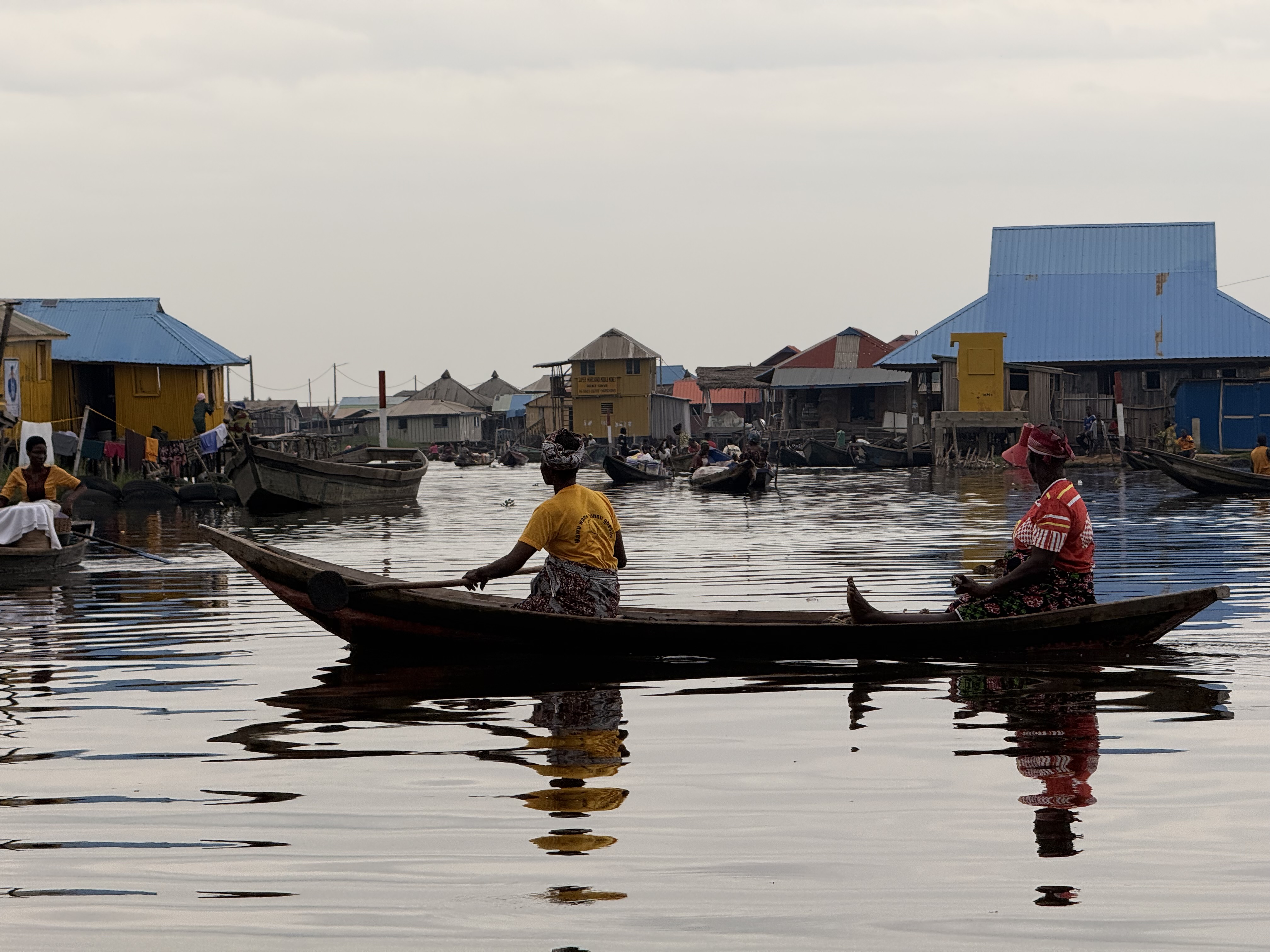
Ganvié, sometimes called the “Venice of Africa,” is Benin’s single most photographed site — a stilted village built on Lake Nokoué around 30km from Cotonou, with no roads or paths between buildings, so the only way in, out and around is by canoe. It’s the largest lake village in Africa and genuinely unlike anywhere else on the continent.
Ouidah is Benin’s spiritual and historical heart: it’s considered the birthplace of Vodun (voodoo) and home to the sobering Door of No Return, a monument marking the point where enslaved people were forced onto ships bound for the Americas. Abomey, a couple of hours north, holds the UNESCO-listed Royal Palaces of Abomey, the seat of the historic Dahomey Kingdom. For wildlife, Pendjari National Park in the far north-west is one of the best remaining safari destinations in West Africa, with lions, elephants, hippos and hundreds of bird species — though note it sits close to the security-sensitive border region covered above, so access depends on current conditions.
Back in Cotonou, Dantokpa Market is one of the largest open-air markets in West Africa and worth an afternoon on its own — everything from fabric and fresh produce to traditional fetish items associated with Vodun practice is sold there, spread across a genuinely huge riverside site.
We’ve put together a full guide to visiting Ganvié specifically: How to Visit Ganvié, Benin – The Venice of Africa .
Languages
French is Benin’s official language, a legacy of French colonial rule, and it’s what you’ll need for most signage, official interactions and dealing with authorities. Fon and Yoruba are the most widely spoken indigenous languages in the south, with dozens of other local languages spoken across the country’s different regions and ethnic groups.
English is not widely spoken outside of higher-end hotels and tour operators, so a handful of French phrases go a long way — bonjour (hello) and merci (thank you) will get you far, and it’s worth having a translation app on hand for anything more detailed.
What to Pack for Benin
Pack light, breathable clothing — Benin is hot and humid for most of the year, especially along the coast. Modest dress is appreciated when visiting religious or ceremonial sites in Ouidah and Abomey, so pack a few more conservative options alongside your beachwear.
Bring cash in small denominations for Ganvié and other rural stops, since ATMs are limited outside the bigger towns and there are none at all in the lake village itself. A hat, sunscreen and mosquito repellent are essential year-round, and if Pendjari National Park is on your itinerary, pack proper walking shoes and neutral-coloured clothing for game drives.
When Is the Best Time to Visit Benin?
November to February is the sweet spot — the dry season brings clearer skies, more comfortable temperatures and easier travel around Ganvié and the coastal south, without the risk of getting caught in a rainy-season downpour on the lake. This window also overlaps with the best wildlife viewing at Pendjari National Park, as animals cluster around the remaining water sources as the landscape dries out.
The wet season runs roughly from April to October, with a short lull around August. Benin is genuinely visitable year-round if a specific wet-season date is all that works for your schedule, but pack accordingly and expect the occasional washed-out travel day, especially around the lake villages.
Benin is one of West Africa’s most rewarding countries and one of its least visited by outside travellers — which, if you ask us, is exactly the point. Between the voodoo heartland of Ouidah, the stilted village of Ganvié, the royal history of Abomey and the wildlife of Pendjari, there’s a genuinely complete trip packed into a country most people couldn’t place on a map.
Do we offer Benin tours?
Yes — we run both group and private tours to Benin, and it pairs naturally with a wider West Africa route through neighbours like Togo. Take a look at our Africa group tours page for current departures and itineraries.
How can I book a tour?
Get in touch with us at [email protected] and we’ll help you find the right trip, whether that’s one of our scheduled group departures or a fully private itinerary built around what you want to see.