Turkmenistan is one of the most misunderstood countries on earth, and also one of the most rewarding to actually visit. White marble skyscrapers rise out of the desert in Ashgabat, ancient Silk Road cities lie half-buried in the sand a few hours outside the capital, and the whole country runs at a strange, fascinating remove from the rest of the world. Fewer tourists visit Turkmenistan in an entire year than visit most European cities in a single afternoon, and that scarcity is a huge part of the appeal — you genuinely won't have seen anywhere quite like it.
We've been running tours here for years, usually as part of our wider Central Asia and 7 Stans itineraries, and we've put together this guide to cover everything you need to know before you go — visas, money, safety, food, the sites worth building your trip around, and when to actually go. You can read more about how we first got started running tours here in Our Turkmenistan Story , and treat the rest of this guide as the practical companion to that story.
How to Get a Visa for Turkmenistan?
Turkmenistan remains one of the last countries in the world without an e-visa system for most travellers, and it doesn't allow independent tourism in the way many neighbouring Central Asian countries now do. Visiting requires a Letter of Invitation (LOI), arranged in advance through a registered tour operator such as ourselves, which then allows you to apply for a visa on arrival at the airport or land border. The process is more bureaucratic than most countries you'll have visited, but it's well-trodden and predictable once you know the steps.
We've written a full walkthrough of the current process in How to Visit Turkmenistan in 2026 , covering the LOI application, what to expect at the embassy stage (spoiler: for most nationalities, there isn't one — you don't need to visit an embassy at all), and what freedom of movement actually looks like once you land. In practice, the government is considerably more lenient than its reputation suggests when it comes to who it lets in — occupation and background rarely cause the problems people expect, and once your permits are arranged, you can move around Ashgabat far more freely than most first-time visitors assume.
Budget carefully for the fees involved, because there are several, and they add up. We've broken down the full cost structure in Turkmenistan Entry Fees: The Real Costs for Tourists — in short, the LOI fee is paid separately before arrival, then the visa-on-arrival fee itself typically runs from around $85 USD up to $150 USD depending on your passport and visa length, and on top of that there's a migration tax (currently $14 USD, and applied to everyone including Turkmen nationals), plus a bank fee for the privilege of processing the other payments. All of these fees must be paid in crisp, undamaged US dollar bills — cards, other currencies, and older or worn banknotes are routinely refused, so come prepared with clean notes and a mix of denominations.
Timing matters more here than in most countries. The LOI application needs to be submitted well in advance of your trip — we recommend starting the process at least six to eight weeks out, since processing times can vary and occasionally slip, and there's no way to rush it once it's submitted. Once your LOI is approved, the actual visa-on-arrival stamp is usually a formality, but it does involve queuing at a bank desk to pay each of the fees in turn, so build extra time into your arrival plans rather than expecting a quick in-and-out at immigration.
Getting Into Turkmenistan — Flights and Land Borders
Most travellers fly into Ashgabat International Airport, an impressive falcon-shaped terminal building in its own right, and Turkmenistan Airlines runs the national carrier's routes alongside a small number of international airlines connecting through hubs like Istanbul and Moscow. Booking through the national carrier has historically been a little clunky, so it's worth reading our note on the Turkmenistan Airlines Website before you try to book anything yourself. If you're weighing up routes into the region generally, our guide on the cheapest way to fly to Central Asia is worth a read too, since Ashgabat is rarely the cheapest entry point on its own.
Once you're in the country, distances are large and public transport limited, so domestic flights are genuinely useful rather than a luxury — we've covered the practicalities in Exploring Turkmenistan by Air: A Guide to Domestic Flights .
Land borders are also possible, though each has its own quirks, and almost all of them require the same advance planning as the visa itself — this isn't a country where you can show up at a random crossing and expect to talk your way through. The crossing between Serhetabat and Torghundi links Turkmenistan with Afghanistan and is one of the least-travelled frontiers anywhere in the world — it's primarily a freight crossing, but it can be used by travellers on pre-arranged guided tours, and we explore it as part of our 7 Stans tour. Typical opening hours run from 08:00 to 17:00, though in winter the border can close as early as 15:00, and lunch breaks are taken daily, so timing your arrival matters.
On the western side, the Turkmenistan–Iran border runs along the Kopetdag mountain range, a boundary with a genuinely fascinating history dating back to an 1869 agreement between the Russian and Persian empires — as much a cultural dividing line between Central Asia and the Middle East as a political one as it is a modern political border. Crossings to and from Turkmenistan's other Central Asian neighbours exist too, though availability and ease of use can shift with little notice, so always check current status with us before building a land-border crossing into your itinerary.
Money — Currency and Costs
The Turkmen manat is the local currency, but in practice you'll be dealing in US dollars for almost every official fee you pay on arrival, and USD is also the most useful currency to carry generally. Withdrawing US dollars from your own foreign bank card inside the country is possible, but only through one institution — we've written a full guide on How to Get US Dollars in Turkmenistan , covering the Foreign Economic Bank's main branch in Ashgabat, its opening hours, and why exchanging manat for dollars informally is essentially impossible in practice, whatever you might read online.
Day-to-day costs inside the country are low once your visa and tour fees are settled — meals, local transport and small purchases are inexpensive by almost any international standard, and most of what you'll spend on the ground is on souvenirs, tips and the odd extra excursion. The bulk of the real cost of a Turkmenistan trip sits upfront, in the LOI, visa and associated fees covered above, rather than in daily spending once you've arrived.
Health
Stick to bottled or filtered water throughout the trip, and take particular care with food hygiene outside of hotel restaurants. Summer heat is a genuine health consideration too — temperatures in the Karakum Desert regularly climb well past 40°C, so pace yourself, stay hydrated, and avoid strenuous activity in the middle of the day if you're travelling outside the cooler months.
Is Turkmenistan Safe to Travel?
Turkmenistan is, in practical terms, one of the safer countries we operate tours in — crime against tourists is extremely rare, and the government's tight control over the country cuts both ways for visitors. That said, it's a heavily regulated environment: photography restrictions are taken seriously, government buildings and anything resembling official infrastructure should not be photographed without permission, and your guide will steer you clear of any genuine grey areas. A lot of what circulates online about the country is exaggerated or simply out of date — we've debunked some of the more persistent rumours, including claims about driving restrictions on women, in Turkmenistan Driving Myths Petty crime, scams and hassling of tourists — common frustrations in many other parts of the world — are almost entirely absent here, which is a genuine relief for anyone who has travelled extensively elsewhere in the region.
Food
Turkmen food shares plenty with its Central Asian neighbours, built around bread, rice and meat, but with its own distinct character. Plov, a rice dish cooked with meat, carrots and onions, is the closest thing the country has to a national dish, and you'll find it at almost every celebration and most restaurants — recipes vary from region to region, and locals take the differences seriously. Shashlik — skewered, grilled meat, usually lamb or beef — is everywhere, as is manty, steamed dumplings filled with meat and onion, and various forms of somsa, a baked pastry stuffed with meat or pumpkin depending on the season.
Bread (chorek) is treated with real reverence here; it's considered disrespectful to place it upside down or let it touch the floor, and you'll often see it kissed or touched to the forehead if it's accidentally dropped. Green tea is the default drink with every meal, served constantly and often unprompted, and turning it down is unusual enough that most visitors just learn to enjoy it. Melons deserve a special mention too — Turkmenistan is famously proud of its melons, even dedicating a national holiday to them each August, and the quality genuinely lives up to the fuss.
What Are the Main Sites to See in Turkmenistan?
Ashgabat itself is worth a couple of days on its own — a genuinely bizarre, gleaming white marble capital city that has to be seen to be believed, packed with record-chasing monuments and architecture, gold statues, and vast, empty boulevards. It holds the Guinness World Record for the highest concentration of white marble buildings anywhere on earth, and wandering it after dark, when the fountains and monuments are lit up, is one of the more surreal experiences you'll have anywhere as a traveller. We've catalogued some of our favourites in Turkmenistan: A Country of World Records (the world's largest indoor Ferris wheel among them) and Top 5 Coolest Buildings in Turkmenistan . If you want to experience the capital more actively than most visitors do, our practical guide on How to Go Running in Ashgabat is a fun, slightly unusual read.
Just outside the capital, Nisa , a ruined Parthian royal city dating back to around 200BC, is one of Turkmenistan's three UNESCO World Heritage Sites and is often unfairly overlooked in favour of the country's biggest draw, Merv. A few hours east near the modern city of Mary, the ancient city of Merv was, at various points in its history, quite possibly the largest city on earth, and its layered ruins — spanning Bronze Age beginnings through to medieval Islamic empires — are a highlight of any trip. Further afield still, Dekhistan , a lesser-visited lost Silk Road city out in the desert, rewards travellers willing to go further off the beaten path.
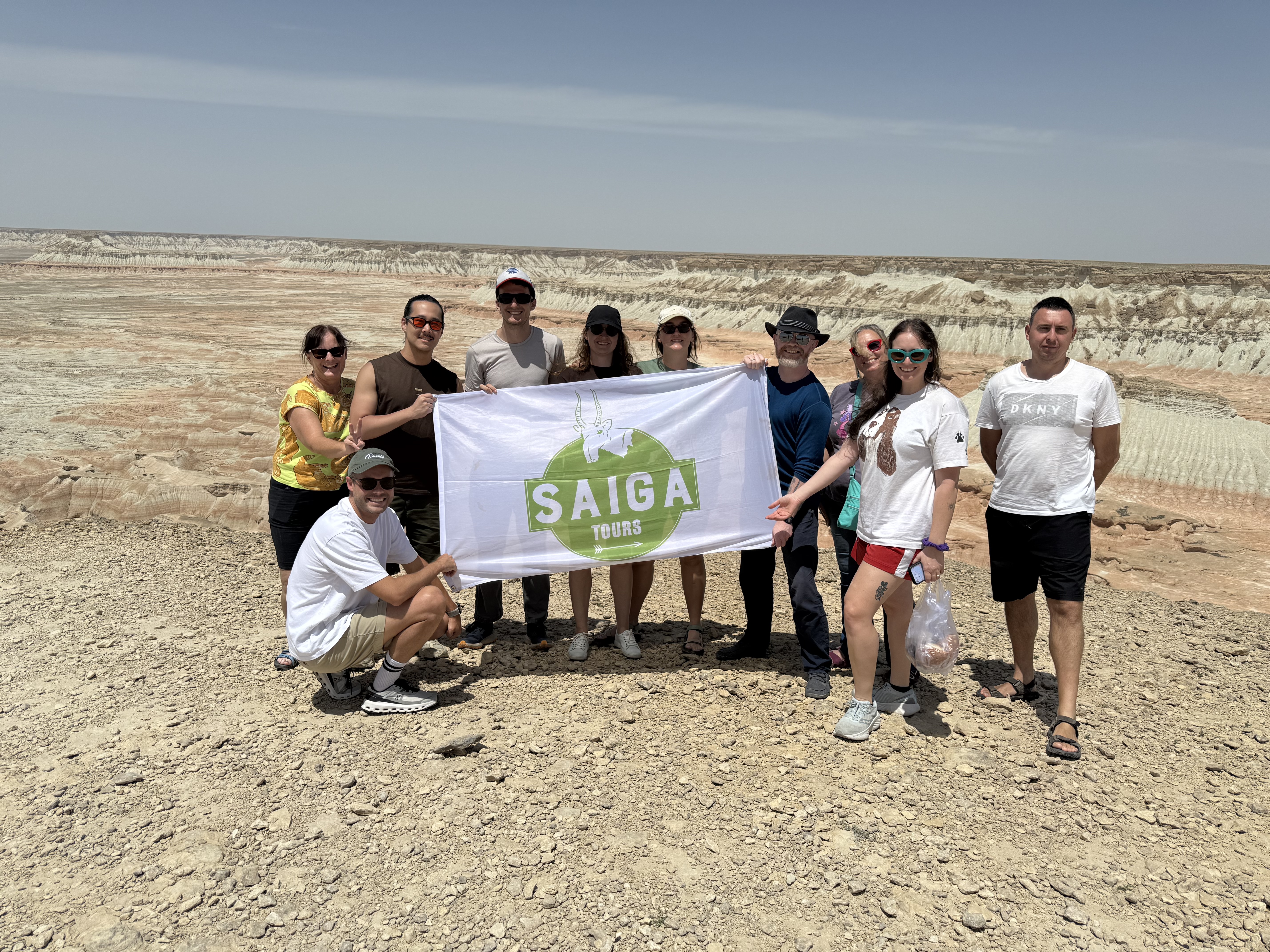
Turkmenistan's natural landscapes are just as remarkable as its ruins. The Karakum Desert , meaning "black sand", covers roughly 70% of the entire country and is home to the famous Darvaza gas crater among other oddities. Out in the country's remote northeast, near the borders with Uzbekistan and Afghanistan, the dinosaur plateau holds the world's largest known concentration of dinosaur footprints, an extraordinary and little-known sight even by Turkmenistan's own unusual standards — it's one of the reasons the country regularly turns up on lists like our own Our Top 8 Most Unusual Tourist Destinations .
Beyond Ashgabat, Turkmenistan's regional cities are worth building into a longer itinerary. Turkmenabat , the country's second-largest city with a population of around 280,000, sits on the Amu Darya River in the east and has served as a Silk Road trading post since antiquity, today acting as the main gateway to Uzbekistan. In the west, Balkanabat , capital of the Balkan region and home to around 110,000 people, sits at the foot of the Uly Balkan mountain range and combines its Soviet-era oil and gas industry heritage with access to some of the region's most striking natural scenery.
Languages
Turkmen is the official language, a Turkic language closely related to Uzbek and Azerbaijani, written in a Latin-based alphabet since the post-Soviet reforms of the 1990s. Russian remains widely spoken and understood, particularly among older generations and in Ashgabat, a legacy of the Soviet era, and you'll still see it used in some official and commercial signage alongside Turkmen. English is limited outside the tourism industry, so your guide will do most of the translating, but a few Turkmen or Russian phrases go a long way with locals, who are generally warm and curious about visitors, especially outside the capital where foreign tourists remain a rarity.
Culture and Customs
Turkmenistan is a conservative, tightly controlled society, and it pays to be aware of that before you arrive. Dress modestly, particularly outside Ashgabat, avoid political conversation in public, and always check with your guide before photographing anything that could be considered official or sensitive. The country's obsession with grand architecture and record-breaking monuments is a genuine part of the national culture rather than just a curiosity for outsiders — worth remembering as you take in sights that can otherwise feel almost surreal. Even foreign royalty has taken an interest over the years: we've written up the story of the time Prince (King) Charles visited Turkmenistan , a fun bit of trivia that captures just how unusual this country's place in the world really is.
Hospitality runs deep in Turkmen culture, and if you're invited into someone's home, expect to be fed generously and repeatedly regardless of how full you claim to be — politely accepting a little of everything is the safest approach. Family and community ties matter enormously, and traditional dress, particularly among women in more rural areas, remains common, with long dresses and elaborately patterned headscarves a common sight even as Ashgabat itself has modernised rapidly around them.
What to Pack for Turkmenistan
Pack for extremes — the Karakum Desert climate swings from summer highs well over 40°C to genuinely cold winters, so check the season before you go and pack layers accordingly. Bring clean, crisp US dollar notes for all your official fees, in a range of denominations, since change is not always readily available at the border or airport, and older or worn notes are frequently refused outright. A universal adapter (Turkmenistan uses the European two-pin plug, type C and F), comfortable walking shoes for the ancient sites at Merv and Nisa, strong sun protection for desert stops, and a printed copy of your LOI and any other paperwork are all worth having in your bag — don't rely solely on digital copies given patchy connectivity in places.
When Is the Best Time to Visit Turkmenistan?
Spring (April to May) and autumn (September to October) are the best windows, with far more comfortable temperatures for exploring both Ashgabat and the desert sites than the brutal heat of summer, when daytime highs at places like Merv and the dinosaur plateau can become genuinely punishing. Winters can be cold, particularly in the desert at night, but are perfectly manageable for a shorter city-based trip focused on Ashgabat itself. If your dates are flexible, keep an eye out for national holidays and independence day celebrations too, which bring out some of the country's most striking parades and monument lighting displays.
Turkmenistan isn't an easy country to visit, and that's exactly the point — the bureaucracy and the isolation are part of what keeps it so untouched, and so different from anywhere else you'll go in Central Asia. Very few travellers can say they've stood in front of a UNESCO Silk Road ruin at Merv or Nisa in the morning and been marvelling at marble skyscrapers and record-breaking monuments in Ashgabat by evening, and that contrast alone makes the planning worthwhile. For travellers willing to put in the effort, it remains one of the strangest, most photogenic and most memorable destinations we run tours to anywhere in the world.
Do we offer Turkmenistan tours?
Yes — Turkmenistan is one of our core destinations, and we run regular group departures as well as private tours, including as part of our wider 7 Stans itinerary. Take a look at our Turkmenistan tours on our website, or read more about how we got started here in Our Turkmenistan Story .
How can I book a tour?
Send us an email at [email protected] and we'll help you plan your trip.