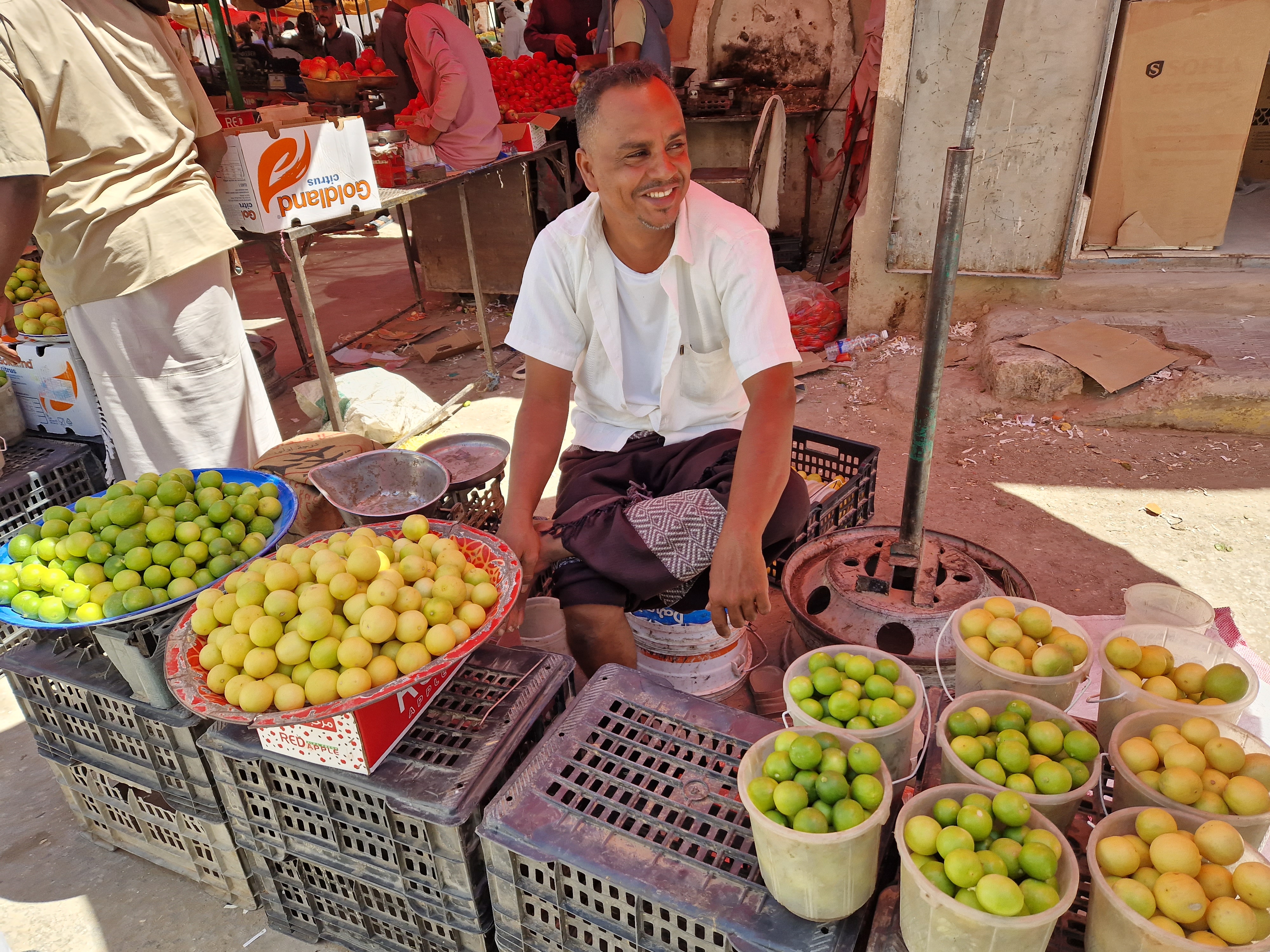
Yemeni food doesn't get anywhere near the attention it deserves, probably because so few outsiders have actually had the chance to eat it properly. That's changing for our groups travelling through Hadhramaut, and it's some of the best regional cooking we've come across anywhere on our tours — big, communal, hand-eaten meals built around slow-cooked meat, real spice, and a hospitality culture where the food genuinely doesn't stop coming. Here's what to look out for.
1. Mandi
Mandi is Yemen's most famous export and for good reason: lamb or chicken slow-cooked over rice in a pit dug into the ground, so the meat's smoke and juices drip straight down into the rice as it cooks. In Hadhramaut this is still done the traditional way rather than in a gas oven, and the difference is obvious the first time you try it — properly smoky, falling-apart meat with rice that's absorbed all of it.

2. Saltah
Saltah is Yemen's national dish, and it's a genuinely odd-sounding one until you've had it: a meat and vegetable stew topped with a frothed fenugreek foam that looks a bit like meringue and tastes nothing like you'd expect. You scoop it up with flatbread rather than using a spoon, and it's typically a lunch dish rather than dinner — we'd always recommend trying it earlier in the day when it's meant to be eaten.
3. Fahsa
Fahsa is a shredded meat stew, usually lamb or beef, simmered until it genuinely falls apart, and it's the dish we'd point to if you want something warming and rich rather than delicate. It's often served bubbling hot straight from the pot with flatbread on the side for dipping, and it's a good one to order alongside Saltah so you've got both textures on the table.
4. Zurbian
Zurbian is Yemen's answer to biryani — rice and meat (usually lamb) cooked together with a tomato-and-yoghurt spiced sauce, believed to have originated in Aden. It's more of a special-occasion dish than an everyday one, so if you see it on a menu or get offered it at a gathering, take it as a sign you're being looked after.
5. Bint Al-Sahn
This is the dessert to save room for: a layered, honey-soaked flatbread made from a soft enriched dough, baked until golden and then drenched in honey and clarified butter (ghee) right before serving. It's sticky, genuinely sweet, and the kind of thing that turns up at the end of a big meal or during celebrations — worth ordering even if you think you're full.
6. Aseeda
Aseeda is a smooth, dough-like base made from flour, water and yoghurt, served with a rich chicken broth poured over the top. It's eaten with your fingers straight from a shared bowl, which makes it one of the more communal dishes on this list — don't be surprised if you're handed a spoon and told not to use it.
7. Shafut
Shafut is a cold, tangy dish built on flatbread soaked in yoghurt, sometimes topped with herbs or a bit of chilli, and it's a genuinely refreshing thing to be served in the middle of a hot day in Hadhramaut. It usually turns up as part of a lunch spread rather than as a standalone dish, so expect it alongside two or three other things on the table.

8. Zhug (Sahawiq)
Zhug — also spelled sahawiq — is the green chilli, garlic and coriander sauce that turns up on pretty much every table in Yemen, and it's worth asking for even if it's not automatically brought out. It's hot, herby, and genuinely addictive once you get used to it; we'd suggest starting with a small spoonful stirred into whatever stew you've ordered rather than piling it straight onto bread.
9. Qishr
Qishr is the everyday drink of Hadhramaut, and it's not actually coffee in the way most people mean it — it's brewed from the dried husk of the coffee cherry rather than the roasted bean, simmered with ginger and warming spices. It's lighter and fruitier than a normal coffee, served in small cups that keep getting refilled, and it's a genuinely good way to end a meal.
10. Sidr Honey
Yemen produces some of the most sought-after honey in the world, made from bees that feed on the Sidr tree, and it's worth buying a jar to take home even if you don't try much else on this list. It's thick, dark, and genuinely different from supermarket honey — Yemenis take it seriously enough that it's given as gifts and used medicinally, not just spread on bread.
A Few More Worth Squeezing In
Mukalla, Hadhramaut's coastal city, has its own smoked-fish tradition worth seeking out if you're near the water — it's a genuinely different side of Yemeni cooking from the meat-heavy dishes further inland. Malawah, a flaky layered flatbread, is also worth grabbing for breakfast, usually served with honey or alongside eggs.
A Note on Eating Like a Local
Most meals in Yemen are eaten seated on the floor around a shared platter, using your right hand rather than cutlery — if you're not used to it, it takes a meal or two to get comfortable, but it's genuinely part of the experience rather than an inconvenience. Hospitality here is taken seriously: expect to be offered more food than you can realistically finish, and expect saying yes to at least some of it to go down well.
How to Try This in Person
All of this is very much part of what we build into our Hadhramaut itinerary — proper meals, not just sightseeing between them. Check out The Real Yemen Tour for our next Hadhramaut departure, or send us an email at [email protected] if you want more details before booking.
Sources
- Top 20 Most Popular Yemeni Foods & Dishes — Chef's Pencil (fully read) — https://www.chefspencil.com/most-popular-yemeni-foods/
- Yemeni Foods: 12 Traditional Dishes of Yemen — Travel Food Atlas (fully read) — https://travelfoodatlas.com/yemeni-foods
- What to Eat and Drink in Yemen? Coffee, Honey and Floor Feasts — Koryo Group (fully read) — https://koryogroup.com/blog/yemen-food
- Qishr — Wikipedia — https://en.wikipedia.org/wiki/Qishr
- Zhug — Wikipedia — https://en.wikipedia.org/wiki/Zhug
- Saltah — Wikipedia — https://en.wikipedia.org/wiki/Saltah