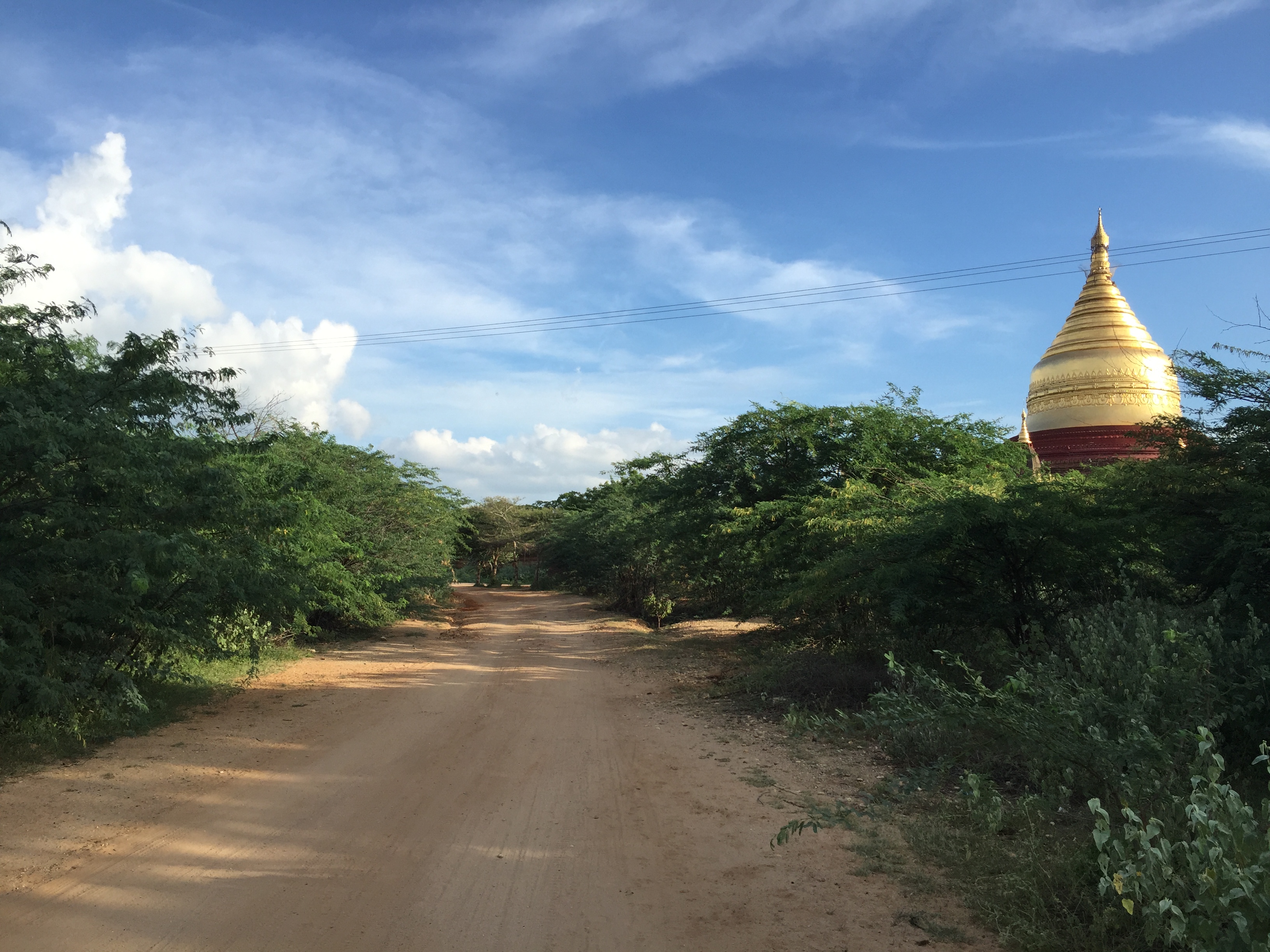
Myanmar spent the better part of two decades cut off from the kind of tourism most of Southeast Asia takes for granted. It's only in the last few years that the country has started reopening properly, and the payoff for travellers who make the trip now is obvious: thousands of gold-topped pagodas, one of the great ancient temple plains on the planet in Bagan, and towns and cities that haven't yet been reshaped around a tourist trail. If Thailand or Vietnam feel like they've already been “discovered”, Myanmar still feels like it's being discovered right now.
Geographically, Myanmar sits at the crossroads of South and Southeast Asia, bordering India and Bangladesh to the west, China to the north and east, and Laos and Thailand to the east and south. That position has shaped everything from its food to its architecture to the sheer number of distinct ethnic groups who call it home, and it's a big part of why the country feels so different from one region to the next.
This guide pulls together everything you need before you go — visas, getting in, money, health, safety, food, the sites worth building a trip around, languages, and when to visit. Where we've written a full standalone guide on a topic, we've linked to it, so use this as your starting point and dig into the specifics from there.
Why Visit Myanmar?
If you had to sum Myanmar up in one line, it'd be this: it's the country in Southeast Asia where the temples still outnumber the tourists. Bagan alone has more than 2,000 surviving temples and stupas spread across a single plain — genuinely one of the great sights anywhere in the world, and one you can still see without fighting through crowds. Add in the golden spire of Shwedagon Pagoda in Yangon, the impossible balancing act of the Golden Rock at Kyaiktiyo, the floating gardens and stilt villages of Inle Lake, and a genuinely staggering mix of ethnic groups and cultures packed into one country, and it's not hard to see why people who've been are so insistent that everyone else go too — before it changes.
It's also a country where daily life still runs on its own terms rather than a tourism schedule. Monks in saffron robes collecting offerings at dawn, hot air balloons drifting over the Bagan plain at sunrise, fishermen rowing with one leg on Inle Lake, tea shops that double as the social hub of every town — these aren't staged experiences, they're just what's happening when you show up.
For more on what makes it worth the trip, we've also put together 7 Strange and Surprising Facts About Myanmar .
How Do I Get a Visa for Myanmar?
Most travellers need a tourist e-Visa, applied for online through the official government portal before you fly. It costs $50 USD, is valid for 90 days from the date it's issued (so you need to enter within that window), and permits a stay of up to 28 days once you're in the country. Processing officially takes a minimum of three business days, but can stretch to two or three weeks depending on demand, so it's worth applying well ahead of your trip rather than leaving it late. Visa-on-arrival is currently suspended, so the e-Visa is the route almost everyone will need to take.
We've written a full walkthrough of the process — How to Get a Myanmar e-Visa — covering the portal, what documents you need, and a few things worth knowing before you apply.
How Do I Get into Myanmar?
Nearly everyone arrives by air. Yangon International Airport is the main gateway, with regular connections from Bangkok (Thai Airways, Thai AirAsia), Singapore (Singapore Airlines), and Kuala Lumpur (Malaysia Airlines), alongside Myanmar Airways International. Mandalay International Airport also handles some international traffic, and tourist e-Visa holders can additionally enter via Nay Pyi Taw or Kawthaung. Land border crossings are largely unavailable to tourists at the moment given the security situation in Myanmar's border regions, so plan on flying in and out rather than trying to overland from a neighbouring country.
Once you've landed, we've also written a guide to one of the more useful domestic routes — Yangon to Naypyidaw: The Ultimate Guide to the Yangon to Naypyidaw Express Bus — if you're planning to travel onward by land within the country.
What's the Currency, and How Much Does It Cost?
Myanmar's currency is the kyat (MMK), currently trading at around 2,090–2,100 kyat to the US dollar. This is very much a cash economy outside of a handful of upscale hotels — cards are rarely accepted, so budget on carrying kyat (and clean, undamaged US dollars as backup) for most of your trip. ATMs are available in the main tourist centres (Yangon, Mandalay, Bagan, Inle Lake), mostly run by CB Bank and KBZ Bank, and dispense kyat only. If you're bringing US dollars to exchange, note that Myanmar banks and money changers are notoriously fussy about condition — notes need to be clean, uncreased, unmarked, and printed after 2006, or you risk having them refused.
Day-to-day costs are low by regional standards — simple local meals can cost the equivalent of a couple of dollars, and even mid-range guesthouses are inexpensive outside peak season. Bring more cash than you think you'll need, especially if you're heading beyond Yangon and Mandalay, since ATM access thins out fast once you're off the main circuit.
Health
Most travellers need to be up to date on routine vaccinations, plus hepatitis A, typhoid, and polio; if you're heading to rural areas, staying longer than a month, or planning to camp or hike, it's worth discussing a Japanese encephalitis vaccine with your travel clinic too. Stick to bottled or filtered water for drinking.
Is It Safe to Travel to Myanmar?
This is worth being upfront about: several governments, including the US and UK, currently advise against travel to Myanmar given the ongoing civil conflict in parts of the country. That said, the picture is very different depending on where you are. The core tourist route — Yangon, Bagan, Mandalay, and Inle Lake, sometimes called the “tourist kite” — sees a steady flow of visitors and is considerably more stable than the border regions where most of the conflict and unrest is concentrated. Our tours stick to this established circuit and don't venture into the areas currently subject to fighting or heightened risk. Overall if you are avoiding border areas and are on the main tourist trail you will not even have any idea that there is anything going on in Myanmar. Tourists are not a target in their conflict and low tourist numbers at the moment mean that there isn’t an industry around targeting tourists in major centers. We think Myanmar is very safe as long as you have common sense.
Food
Myanmar's food doesn't get anywhere near the international attention of its neighbours', which is part of the fun of eating your way around the country — you're mostly discovering it for yourself. Expect a lot of noodle soups and salads built around fermented tea leaves, plenty of Indian and Chinese influence layered over Burmese staples, and dishes that change noticeably as you move between regions.
We've written a full rundown of what to try — Top 10 Foods to Try in Myanmar — and if you're spending time in the capital, our Top 7 Budget-Friendly Restaurants in Naypyidaw to Try is worth a look too.
What Are the Main Sites to See in Myanmar?
The big four are Yangon (for Shwedagon Pagoda and the old colonial quarter), Bagan (for the temple plain — more than 2,000 structures across a single stretch of land), Mandalay (the last royal capital, with its own hill and old palace grounds), and Inle Lake (for stilt villages and floating gardens). Add in the Golden Rock at Kyaiktiyo, the eerily quiet purpose-built capital of Nay Pyi Taw, and the Buddha-filled limestone caverns of the Pindaya Caves, and you've got the backbone of most Myanmar itineraries, including ours.
Bagan deserves a special mention on its own — it's genuinely one of those places that's hard to describe until you've stood in the middle of it. Temples stretch to the horizon in every direction, most of them centuries old, and you can still climb a good number of them for sunrise or sunset views that rival anywhere else in the world. Give it at least two full days if you can; one is never quite enough.
For the full list with more detail on each, see Top 10 Sites to See in Myanmar .
Languages
Burmese is the official language, spoken by around two-thirds of the population and the language you'll hear and see most as a traveller. But Myanmar is home to more than 135 officially recognised ethnic groups and well over 100 languages, including Shan, Karen (Kayin), Rakhine, and Mon among the largest minority languages. English is reasonably well understood in Yangon, Mandalay, and around the main tourist sites — hotel staff, guides, and younger locals in particular — but it drops off quickly once you're away from those centres, so a few basic Burmese phrases go a long way.
When Is the Best Time to Visit Myanmar?
The cool, dry season from November to February is the best time to visit and also the busiest — pleasant temperatures, lush post-monsoon countryside, and every major site fully accessible. March to May gets noticeably hot, particularly across the central plains, while the monsoon (roughly June to September) brings rain to most of the country, though showers tend to be heavy but brief rather than washing out entire days. If you can time it, the Taunggyi Balloon Festival in November (part of the wider Tazaungdaing lighting festival) is one of the more spectacular things you can build a trip around, and Thingyan, Myanmar's water festival marking the new year in mid-April, is an experience in itself if you don't mind getting a little wet.
Do We Offer Myanmar Tours?
Yes — our Myanmar February Summer Tour runs the classic circuit over nine days: starting in Yangon, heading to the Golden Rock at Kyaiktiyo, through the empty highways of Nay Pyi Taw, a local tea leaf salad festival along the way, on to Mandalay, then Bagan for the temples, and finishing at the Pindaya Caves. You can see the current dates and details on our Myanmar tours page .
How Can I Book a Tour?
Get in touch at [email protected] and we'll help you find the right dates, talk through what to expect, and get you booked in.