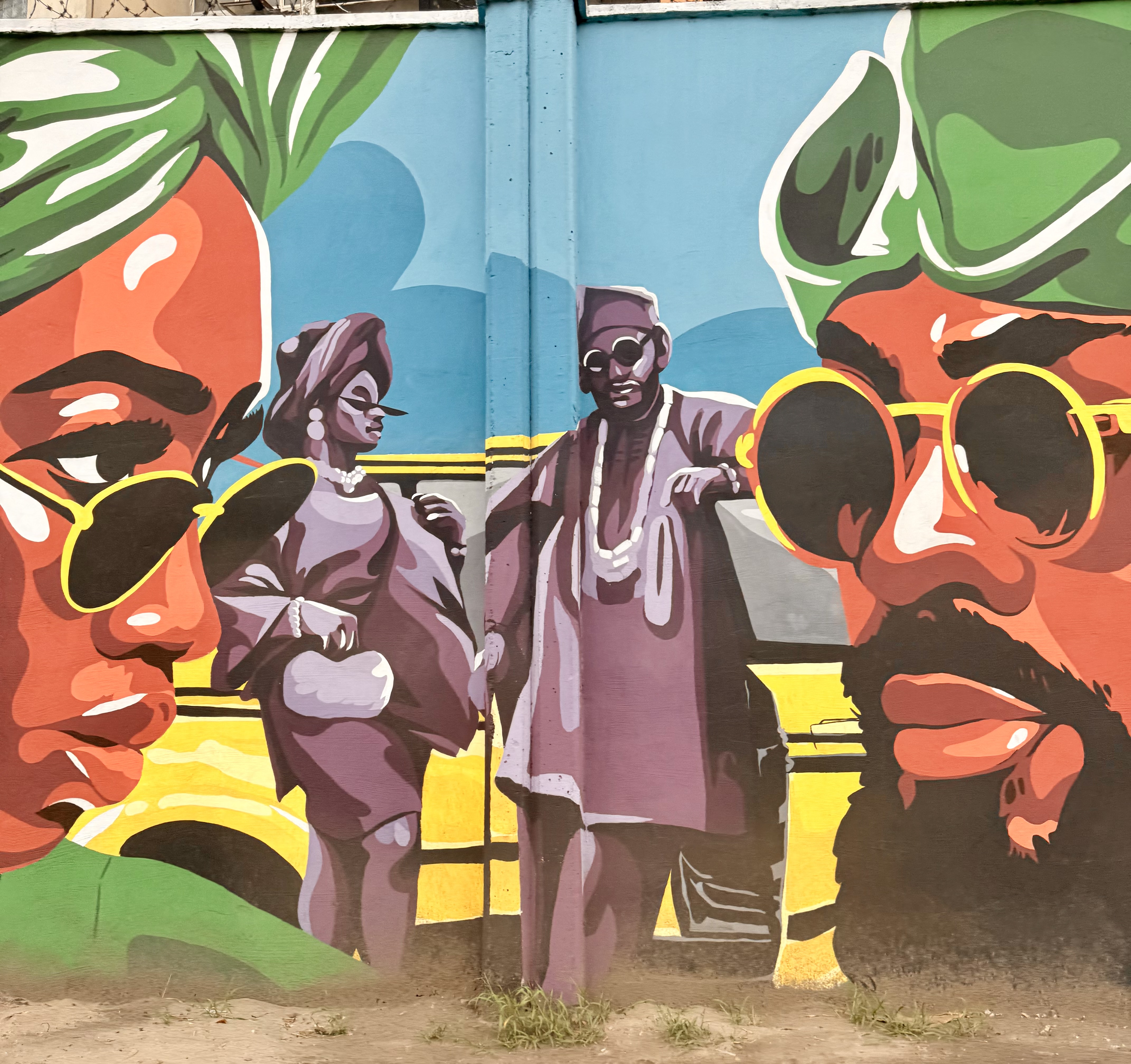
Nigeria is often called the “Giant of Africa” — not just for its size, but for its 230-million-plus population, which makes it the most populous country on the continent and the sixth most populous on Earth. It's a country of enormous contrasts: the frenetic, Afrobeats-soundtracked energy of Lagos sits a few hours' drive from ancient royal cities, sacred forests, and some of West Africa's most important cultural sites. This is the country that gave the world Afrobeats, Nollywood, and some of the continent's most influential ancient kingdoms, and it's one of the fastest, most rewarding introductions to West Africa you can have.
Our Best of Nigeria tour focuses on the Yoruba heartland in the south-west, where the history is richest and the travelling easiest, but there's plenty more to the country worth knowing about too. If you just need the visa sorted, see our guide to How to Get a Nigerian E-Visa .
How to Get a Visa for Nigeria?
Since May 2025, Nigeria has run its own e-visa system, and for most nationalities the entire application can be completed online before you even leave home — no embassy visit required. Unlike some of our other destinations, there's no Letter of Invitation or tour-booking requirement to get one.
The official portal is evisa.immigration.gov.ng — make sure you're using this exact site, as third-party “visa agency” websites often charge well above the real fee. You'll need a passport valid at least six months beyond your travel dates, a recent passport-size photo, proof of accommodation, your flight tickets, and a bank statement showing proof of funds (around US$2,000 is generally considered sufficient, though there's no official published minimum).
A single-entry tourist e-visa runs to around US$300–330 for passport holders from the US, UK, EU and Australia — it's not a cheap visa, made up of a visa fee plus a consular service fee, and fees vary a little by nationality. Processing is usually quick, with most applications answered within 24–48 hours, but we'd never recommend leaving it to the last minute. Once issued, the visa is valid for 90 days and allows a single-entry stay of up to 30 days.
You'll also need a Yellow Fever vaccination certificate — this isn't part of the e-visa upload, but it's checked on arrival and you can be denied entry without it, so get vaccinated at least 10 days before you travel. On top of the visa, you'll need to complete an electronic arrival card before you land and an electronic departure card before you leave, at lecard.immigration.gov.ng. If you're a citizen of another ECOWAS member state, you don't need a visa at all — Nigeria maintains free movement with its regional neighbours.
We cover the full step-by-step process, including a couple of hiccups we ran into along the way, in our dedicated guide, How to Get a Nigerian E-Visa .
Getting Into Nigeria — Flights and Land Borders
Most travellers fly into Murtala Muhammed International Airport (LOS) in Lagos, Nigeria's busiest hub and the main gateway for our tours, with direct flights connecting from London, Dubai, Istanbul, Addis Ababa, Johannesburg and a growing number of US cities. British Airways, Emirates, Turkish Airlines, Qatar Airways, Ethiopian Airlines, Air France, Lufthansa and KLM are among the main carriers. Nnamdi Azikiwe International Airport (ABV) in the capital, Abuja, is the second major entry point.
Nigeria shares land borders with Benin, Niger, Chad and Cameroon. The Seme border with Benin, just outside Lagos, is by far the busiest and most straightforward crossing, and the one we'd recommend if you're combining Nigeria with a wider West Africa itinerary. Current security guidance urges caution across the northern border regions, so we don't advise attempting any of the northern land crossings into Niger at the moment. The Cameroon border in the east has multiple crossing points and is possible to cross, while the Chad border, around Lake Chad, is the least used and generally not recommended for tourists.
Our full guide, Getting Into Nigeria: Flights and Land Borders , covers exactly which airlines are flying and what to expect at each crossing.
Money — Currency and Costs
The currency is the Nigerian Naira (NGN), and Nigeria is the only country where it's used. Notes currently in circulation include ₦5, ₦10, ₦20, ₦50, ₦100, ₦200, ₦500 and ₦1,000 — given the exchange rate, you'll find yourself carrying a fairly thick wad of notes for everyday spending, which is completely normal.
ATMs are widely available in Lagos, Abuja and other major cities and generally accept international cards, though foreign transaction fees can add up and machines are far less reliable outside the big cities, so it's worth carrying backup cash. USD is commonly accepted for larger purchases at upscale hotels, but for markets, restaurants and taxis you'll need Naira. Nigeria also has a long-running gap between the official bank exchange rate and the parallel, street-level “Aboki” rate — we'll always advise you of the current situation closer to your tour rather than quoting a figure here that may be out of date.
Health
A Yellow Fever vaccination certificate is mandatory for entry into Nigeria and is checked on arrival — get vaccinated at least 10 days before you travel, as you can be denied entry without it. Malaria is present across the country, so antimalarial medication is strongly recommended; talk to a travel doctor before you go, and pack a good insect repellent. Pharmacies are plentiful in Lagos and Abuja but much less reliable outside the major cities, so bring any regular medications with you.
Is Nigeria Safe to Travel?
Nigeria has a mixed safety picture depending on where you are, and it deserves a straight answer rather than a glossed-over one. Lagos, Abuja and the Yoruba south-west — the areas our tours focus on — see millions of visitors and business travellers each year and are broadly safe for prepared travellers who take sensible precautions, use trusted transport (ride-hailing apps like Uber and Bolt are widely used and generally the safest option), and avoid isolated areas late at night.
Current guidance advises against travel to Nigeria's far north and north-east, and caution in parts of the Niger Delta. Our tours are built entirely around the well-established, regularly-run southern and south-western routes, and we monitor the situation closely and adjust our itineraries where needed. We've written more on this in our guide, Is It Safe to Travel Nigeria?
Food
If some of our other destinations run toward plain, meat-and-potatoes cuisine, Nigeria is the opposite end of the spectrum. Nigerian food is bold, spicy and generous, built around rich stews, slow-cooked soups, and starchy “swallows” designed to be eaten by hand. Jollof rice — West Africa's most famous dish, and a genuine source of rivalry between Nigeria, Ghana and Senegal over who does it best — is everywhere, from street stalls to weddings. Suya (grilled, spice-coated skewers of beef or chicken) is one of the best street food experiences in the country, and egusi soup, made from ground melon seeds, is usually served alongside pounded yam or eba.
Local beers like Star and Gulder are cheap and widely available, and Lagos has a growing craft brewery scene. Palm wine, tapped straight from palm trees, is a local classic worth trying, and for something non-alcoholic look out for zobo (a hibiscus drink) or a Chapman, Nigeria's signature cocktail. Our guide, Must-Try Foods in Nigeria , goes through our favourites in detail.
What Are the Main Sites to See in Nigeria?
Nigeria has plenty to offer, from the floating villages and Afrobeat legacy of Lagos to the sacred forests and royal palaces of the Yoruba heartland. In Lagos, don't miss Makoko, the extraordinary floating village built on stilts over the lagoon, the Kalakuta Museum and Fela Shrine, tracing the legacy of Fela Kuti, and the Lekki Conservation Centre's treetop canopy walk. From there, our route heads north into Ogun State for Olumo Rock and the Alake Palace in Abeokuta, before reaching Ife-Ife, the spiritual cradle of the Yoruba people, and finally Osogbo, home to the UNESCO-listed Sacred Grove of Osun — over 400 years old and still an active place of worship.
Beyond our current route, Abuja, Kano and Calabar are all worth knowing about if you've got more time or want a custom itinerary. Our full rundown, Top 10 Sites to See in Nigeria , covers all of these in more detail.
Languages
Nigeria's official language is English, a legacy of British colonial rule, and it's genuinely one of the easier destinations we run tours to if English is your first language. Beneath that official layer, Nigeria is one of the most linguistically diverse countries on Earth, with over 500 indigenous languages spoken — Hausa in the north, Yoruba in the south-west and Igbo in the south-east are the three that dominate. You'll also hear Nigerian Pidgin everywhere, an English-based creole that acts as the country's true lingua franca. Our guide, Languages of Nigeria , covers useful phrases in both Yoruba and Pidgin.
Culture and Customs
Nigeria is roughly split between a Muslim-majority north and a Christian-majority south, with the Yoruba south-west sitting somewhere in between and often mixing both faiths within the same extended family — traditional Yoruba beliefs, including the worship of Osun, the river goddess, still exist alongside Islam and Christianity, which is part of what makes sites like the Sacred Grove of Osun so significant.
Nigeria is home to more than 250 ethnic groups, though three dominate: the Hausa-Fulani in the north, the Yoruba in the south-west, and the Igbo in the south-east. It's a federal republic made up of 36 states plus the Federal Capital Territory, currently led by President Bola Tinubu, and returned to civilian democratic rule in 1999 after decades of military governments following independence from Britain in 1960.
Nigerians love to talk — about football, Afrobeats and Nollywood, and about food, especially the age-old, only half-joking rivalry over whose region makes the best jollof rice. Politics and religion can be more sensitive depending on who you're speaking with, so as ever, take your cues from the conversation.
Nigeria's flag — three vertical stripes of green, white and green — has a good story behind it. Ahead of independence in 1960, the government ran a nationwide open contest to design the new national flag, and it was won by Michael Taiwo Akinkunmi, a 23-year-old Nigerian student studying in London at the time, out of a field of more than 3,000 entries. The green stripes represent Nigeria's agriculture and natural wealth, and the white stripe represents peace and unity.
What to Pack for Nigeria
Across the south — including Lagos and the Yoruba heartland our tour covers — expect a hot, humid, tropical climate year-round, so light, breathable clothing is the priority. The dry season runs roughly November to March, with the driest, most comfortable weather in January and February; the wet season runs April to October, with the heaviest rains typically falling between June and September, and a light rain jacket is worth packing if you're travelling then. From December to February you may also encounter the Harmattan, a dry, dusty wind blowing down from the Sahara.
Lagos is fairly relaxed when it comes to dress, but pack something a little more modest — covering shoulders and knees — for visiting religious and sacred sites like the Sacred Grove of Osun, churches or mosques. Comfortable, breathable shoes will cover you for most of the tour, but for the Sacred Grove itself, where you'll be walking through forest on uneven, sometimes muddy ground, closed-toe shoes with a bit more grip are worth having. Don't forget your Yellow Fever certificate and any antimalarial medication.
When Is the Best Time to Visit Nigeria?
The best time to visit is during the dry season, from November to February, when humidity is lower and rain is rare — January and February are generally the driest and sunniest months. We'd generally recommend avoiding August to October, when the wet season is at its heaviest.
Do we offer Nigeria tours?
Yes — our Best of Nigeria tour runs each February through Lagos, Abeokuta, Ife-Ife and Osogbo, and Nigeria also forms part of our combined Best of West Africa tour alongside Benin and Togo. Take a look at our Nigeria tours page for what's currently running.
How can I book a tour?
Send us an email at [email protected] and we'll help you plan your trip.