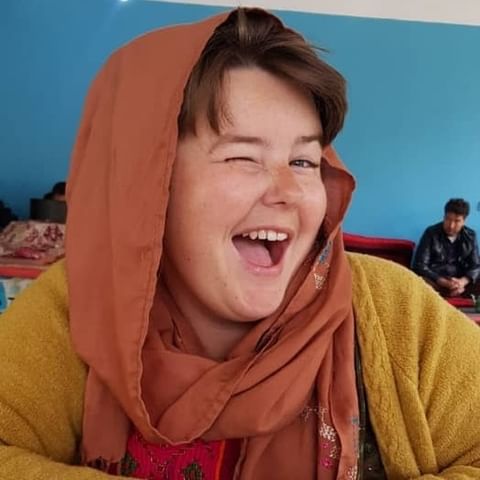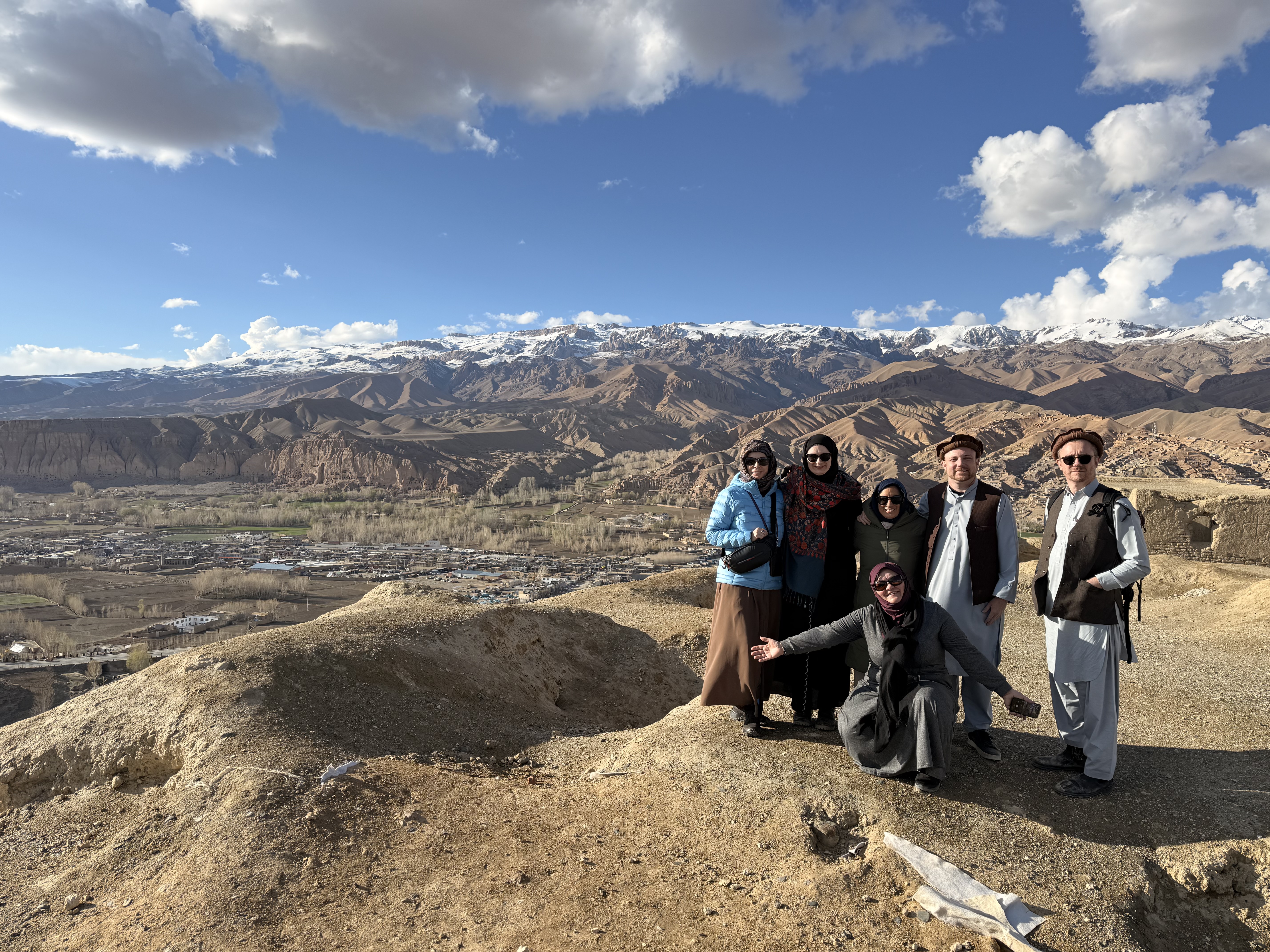
 One of the biggest questions we get from travelers wanting to visit Afghanistan is “what should I wear?” Our advice is always to dress as the locals do. Not only does dressing in an Afghan shalwar kameez or an abaya show respect for the current local customs and give you an opportunity to step into fashions you otherwise likely wouldn’t wear in your everyday life, but it also adds a level of security, allowing you to blend in more. Afghanistan is not a place where you want to stand out. For women especially, while unfair, it is essential to abide by the current dress restrictions (a hijab and conservative clothing). Luckily, it’s easy enough to purchase an Afghan outfit or two when you arrive, which has the bonus of allowing you to pack very light!
Some travelers might hate the idea of wearing unfamiliar clothes and wonder if it is possible to just wear their usual jeans and a t-shirt in Afghanistan. Technically, sure, and I do see it sometimes with other tourists. I have even seen a very brave westerner wearing shorts. But those people always stand out, have gangs of Afghani children hanging off of them begging for money, are prime targets for pushy salesmen, receive stares and occasionally words of disapproval from locals, and in some cases, get the Vice and Virtue police called on them. Sadly, as the world saw in April of 2023, wearing western clothes can also make you a target for acts much more devastating. That is why we require everyone on our tours to adopt the local garb, even in the most basic form, for the safety of our groups, our guides, and yourself.
While you don’t need to go all the way with multiple outfit changes and accessory options, some people might want to lean into the experience and leave the country with a few very cool wearable souvenirs. In this blog, I’ll take you through the fashion trends of each major tourist city, starting of course with Kabul where I’ll give you the basics of what every traveler to Afghanistan should know.
Kabul
Female Travelers in Kabul:
It doesn’t seem like long ago that women would be fine in a shalwar kameez in Kabul, however it is becoming rarer to see them on women. Most women in Kabul are wearing abayas. While it is still technically okay to wear the Pakistani style tunic and pants (provided it is loose and the tunic hits below your knees), you will stand out a bit. The last time I wore a shalwar kameez in Kabul, earlier in 2026, I had no trouble with the Taliban, but I did get an angry rant from a local man about not appearing decent. Instead, I’d recommend fitting in with the local women and wearing a loose, long abaya that goes to your ankles. Note, that there are many times you will need to lift your abaya slightly to hop over gutters in the streets of Kabul, so you should always opt to wear some sort of thin loose trousers under your abaya, so your legs aren’t revealed. Most women wear neutral colors, pastels, or muted jewel tones. Avoid bright colors, but having a bit of rhinestone bling is common for many Kabuli women.
You must always wear a hijab, or headscarf. It is an absolute requirement, even in most hotels. From the moment you leave your hotel room, you should have your hair covered. In Kabul, headscarves are usually worn loosely, with a little bit of hair showing near the forehead. You will see a few women wearing burqas (maybe 10% in Kabul), but I would not recommend wearing one as a foreigner if you are traveling with western men, as the authorities will wonder what a decent conservative local woman is doing walking around with a group of strange men. A niqab (a face veil, usually black, with a slit across the eyes) is also not necessary in Kabul. You used to need one to visit the main religious sites, like Sakhi Shrine, however in the past year, women have been barred from entering the grounds entirely.
Male Travelers in Kabul:
For men visiting Kabul and pretty much anywhere in Afghanistan, you should wear a shalwar kameez (locally known as a
perahan tunban
). There are many different cuts of the shalwar kameez, and the Afghan cut is absolutely the coolest, both in terms of style and breathability. For the shalwar, or trousers, the Afghan style is a very baggy cut. When you first hold up a pair of these, it will feel like the before and after photo for a Weight Watchers commercial. The waist is unbelievably wide, but you will insert a drawstring and tighten for a very loose and roomy pair of one-size-fits-all trousers. The drawstring is typically sold separately, so be sure to pick one up, and pack a large safety pin, which can be a great help in pushing the drawstring through the waistband. For the kameez, or tunic, make sure the hem hits below your knees. There are usually slits/vents near the hem of the tunic, so make sure there are no threads holding this part together, as they can sometimes be sold with basting stitches, and this will be a dead giveaway that these clothes are very new to you. The kameez can also come with a variety of collar and button placket styles, and with pockets or without. Any of these options are fine. For fabrics, as Afghanistan can be very hot and you’ll likely be wearing more layers than you are used to, a breathable cotton is recommended, but can be a bit more expensive. Most options will be blended with polyester, and these will be fine, though not quite as cooling. However, the shalwar kameez itself is designed to be breathable and protect you from the sun, so you should be fine in any option. Be sure to buy the full set so that the tunic and trousers match. Some travelers only purchase a kameez and wear their own trousers on bottom. This is passable, but you will stand out, and you will not look cool, and you’ll be passing up the chance to wear the most comfortable bottoms in the world.

No one knows how to accessorize quite like an Afghan man, and even though every man on the street is more or less wearing the same thing, they each seem to have a unique style and look effortlessly cool. You’re in Afghanistan, so why not have a little fun with it! Try adding a waistcoat, you’ll see both buttoned wool options, as well as sportier fishing vest styles. Pick one with pockets, especially hidden inside pockets for things like your wallet and passport, that way you don’t need to carry a bag, and when you go through a security scan, you can put your entire waistcoat through the conveyor belt. You could also try a scarf around your neck. These come in a variety of colors with solid and checkered options. To tie, wrap the scarf around your face first, then let it drop below your chin after tying. This will help you achieve the perfect drape to the scarf.
Of course, the main accessory most men visiting Afghanistan will want to try is a hat, and there are a few options. The first is the pakol , which is the round wool pancake-style hat. When buying, don’t be afraid to stretch out the band a bit, and note that some of these hats can be a bit itchy, so you should try it on first. Another popular choice is the Kandahari or Sindhi hat, which is a boxier round hat, usually with a tiered cutout in the front. For these hats, don’t be afraid of rhinestones, which are actually masculine as hell in Afghanistan. You’ll often see men wearing these glittering hats in both day and night. For both pakols and Sindhi/Kandahari caps, be sure to wear them a little towards the back of your head as the locals do. It’s also quite popular to wear a scarf over your hat, or a scarf on your head with no hat, which also adds sun protection. You’ll see many other varieties of hats and turbans in shops and on men walking around Kabul. Don’t be afraid to try some new styles!
I’ve got a few more fashion tips for the men. Stick to muted colors if you want to blend in. Khaki, beige, grey, muted olive greens, soft blue-greys, and dark blues are the most common colors. Bright colors like red and teal will make you look like a “village boy,” even if it is something as small as a scarf or a hat. City men also cut the large corner tassels off of their scarves, leaving the smaller side tassels intact. Of course, this isn’t a requirement, but if you want to blend in with the cool Kabul boys, you should consider it.
Bamiyan
Female Travelers in Bamiyan:
In Bamiyan, things are slightly less strict. You will see more color, and you might see more women wearing a shalwar kameez. You will also see more patterned outfits, though still, women are not dressed overly flashy here. Be sure to check out the women’s market near the central bazaar in town, where women run shops selling jewelry, scarves, and various souvenirs. As Bamiyan can be a bit colder, you might want to consider some thermal layers to wear under your abaya or shalwar kameez. You can also wear a jacket or coat over your abaya, and a woolen winter cap in colder months, though you should still wear a headscarf over any hats.
Male Travelers in Bamiyan:
For men visiting Bamiyan, pretty much the same rules as Kabul will apply here. You might see more colors than in Kabul, and more men in the wool Pakol hats here. Bamiyan temperatures can be a bit cooler, so if you’re looking to accessorize, consider a wool waistcoat or even a patu, which is a large woolen wrap that can function as a thick shawl or even a blanket. You’ll see men with patus wrapped around their upper body, or even casually draped over their shoulder. For cold weather, whatever your go-to travel jacket or coat is will be fine to wear over your shalwar kameez. In spring and autumn (and especially winter), temperatures can get very low, and you might even have snow, so be prepared.
Mazar-i-Sharif and Balkh
Female Travelers in Mazar:
In Mazar, most women are wearing long neutral-toned abayas. While the colors might be muted, the women in the north love a bit of sparkle, and you’ll see a fair amount of rhinestones. You will absolutely stand out in a shalwar kameez or bright colors, so an abaya is recommended here. You will also see many women wearing dark blue burqas and wearing niqabs or face masks (like a simple surgical mask). It is a good idea to bring a face mask (one will be required for a visit to the Blue Mosque, the Shrine of Hazrat Ali) to blend in. Try to find your way into a women-only space (such as the women-only floor of a Shir Yakh shop) to talk to some Afghan women and hear firsthand what they think about their current dress codes.
Male Travelers in Mazar:
Again, you are fine to wear what you would wear in Kabul here. There is not much difference for men here, except the temperatures are very hot, so you might want to omit a waistcoat or extra layers. For accessories, you might see more rounded Uzbek-style hats on the locals, or a scarf draped over the head, or more commonly, no hat at all.
Kandahar
Female Travelers in Kandahar:
Kandahar is the Taliban capital and most conservative part of the country, so extra precautions must be taken here. You will not see many women out and about in the city, and the ones you do see will likely be wearing a burqa. While you do not need to wear a burqa yourself (and as I mentioned in the Kabul section, this is inadvisable if you are in a group), you should wear a very loose and long black abaya, hijab, and niqab. Unlike other cities, you should have your face covered everywhere in Kandahar. Exceptions would be if you are in a car (though you must never remove your hijab) or eating. In the villages you pass through as you get close to Kandahar however, you will often see women dressed in the bright traditional nomadic outfits of Afghanistan, which is a very cool sight.
Male Travelers in Kandahar:
Men should also take extra caution in Kandahar. If you tried to get away with jeans and a t-shirt in Kabul, don’t try that in Kandahar, and absolutely under no circumstances should you try to wear shorts. You will be screaming for trouble from the Vice and Virtue police. The people in Kandahar are often prone to gathering into crowds quite quickly, and anything that makes you stand out will likely attract a large group surrounding you. While most people are friendly and are just excited to see a strange-looking foreigner, it can be an uncomfortable experience if the crowd gets a bit frenzied. Because Pashtuns are the dominant ethnic group here, you will see more of the embroidered and bedazzled Kandahari hats here, as well as black turbans which are a sign of adulthood for Pashtun men, and some pakols.
Herat
Female Travelers in Herat:
Herat is currently a place where women need to exercise extreme caution with what they wear. As of June 2026, the Vice and Virtue police have been cracking down on the women of Herat and even arresting women that don’t fall in line with what they deem acceptable. This led to mass protests, which resulted in two deaths and many more wounded after police fired into the crowd. The Taliban are taking dress code extremely seriously here. My theory as to why this is happening is that the women of Herat have historically been very educated and very vocal, which is why the Taliban have been going to extra lengths to suppress them.
Women in Herat must wear a chador or a burqa. Most women in Herat do not want to wear the burqa and have opted for the slightly less cumbersome chador instead (I estimate only 5% of the women here are wearing the burqa). The style of chador worn in Herat is a large rounded scarf that you would wear over your abaya or shalwar kameez and hold with one hand, making something as simple as buying your groceries a bit more difficult. Because the extra layer of the chador makes things a bit hot, most women seem to opt for a more breathable shalwar kameez under the chador, though of course an abaya is fine too. Usually, the chadors worn here are darker muted colors, or dusty pastels, with some subtle patterns. I would recommend wearing your hijab a bit tighter and covering your hairline with it, especially as the chador can cause your hijab to slip a bit. To fashion your chador, center it on your head, then pleat the sides around your face, and hold it with one hand just under your chin or near your chest. When you are in the family section of a restaurant, you can remove your chador, but be sure to keep your hijab on. For women, another rule being enforced in Herat is that socks must be worn with sandals, as showing skin on your feet is now considered indecent.

Male Travelers in Herat:
While the Vice and Virtue police seem mostly concerned with the women of Herat, men should still follow the same local customs. It is not advisable to wear Western clothing here. Even in December of 2025, four local men were arrested for paying homage to their favorite TV show, strutting through their town south of Herat wearing Peaky Blinders-style outfits with flat caps and trench coats. The boys grew a local following and the Vice and Virtue police detained them for promoting western culture and not adhering to Afghan traditions. Things don’t deviate too much here from the styles in Kabul, with shalwar kameez, waistcoats, hats, and scarves being the norm.
Footwear
For both men and women, sandals and sneakers are recommended for Afghanistan. It is not recommended to wear anything you care too much about as there are many places in Afghanistan where your shoes will get dirty and dusty. There are some mosques, such as the Blue Mosque in Mazar, where you will need to remove your shoes to enter the grounds, so having an easily removable option might be a good idea if you have mosques on your itinerary. Additionally, it is quite common to have to hop over large gutters between the road and sidewalk. If you have a slide that can easily fall off your foot, you might want to wear something else, as if your shoe falls into the gutter water that is surely a stage 5 biohazard, you likely won’t want to retrieve it.
Recently, there have been instances of the Vice and Virtue police cracking down on white shoes. Because white is the color of the Taliban flag, some particularly stringent officers say that wearing white shoes is offensive because it seems as though the wearer is trying to step on the flag. Most of these reports seem to be targeted towards women and are coming from Herat where the rules have been getting increasingly strict. While you most likely aren’t going into trouble for wearing white shoes, it is something we’re currently keeping an eye on as restrictions get tighter in Afghanistan.
What should you wear to arrive at the Kabul airport?
For women, while you don’t need to wear a hijab on the plane, you should put it on either right before you get off the plane, or immediately after. If you don’t have an abaya or a shalwar kameez, you should still dress conservatively with loose long sleeves and loose long pants or a long skirt. Otherwise, you likely will face some trouble either at immigration or from the crowd of locals at the exit of the airport.
For men, things are a bit less strict. If you do not own any Afghan clothes yet, long pants and a T-shirt are okay to arrive in. You will not face any issues at immigration for not being dressed in proper local garb, and you’ll notice that many of the other men leaving the plane are dressed a bit more western. While I advise that your first stop after you get to your hotel should be to pick up a shalwar kameez, you will be fine to walk to a shop in your Western clothes, but you will stand out.
Want to Visit Afghanistan?
Afghanistan is one of the most unique countries you can visit, and dressing like an Afghan man or woman is part of what makes it unique. The closer you look, you’ll find the personal style of Afghans is truly unique. If you’re thinking about visiting Afghanistan yourself, check out our group tours here . Of course we can also arrange private tours, so feel free to send us an email to [email protected] if you’ve got any questions about travel to Afghanistan.