Burkina Faso sits right at the heart of the West African Sahel, landlocked between Mali, Niger, Benin, Togo, Ghana and Côte d'Ivoire, with a population of around 23 million spread across roughly 274,000 square kilometres. It's one of the most rewarding, least-visited countries we run trips to. It's also had a genuinely difficult few years, and we're not going to pretend otherwise anywhere in this guide. What follows is everything we've learned running tours here — the sites worth seeing, the practical logistics, and an honest picture of where things currently stand.
The country's official name, Burkina Faso, translates roughly to "Land of Incorruptible People" or "Land of Upright People" — a name chosen in 1984 by revolutionary leader Thomas Sankara when he renamed what had been Upper Volta. It's a small detail, but it says something about the national character you'll encounter travelling here: proud, plain-spoken, and fiercely resourceful.
If you just need the visa sorted, see our guide to the Burkina Faso e-Visa .
How to Get a Visa for Burkina Faso?
Most non-ECOWAS nationalities need an e-Visa, applied for through the official government portal at visaburkina.bf — not a third-party agency site charging a mark-up. You'll need a passport valid at least six months beyond your travel dates, a white-background photo, a hotel reservation, proof of onward travel, and a yellow fever certificate dated at least 10 days before arrival.
The fee isn't published as one flat number — it depends on the exact visa category — but travellers have reported paying anywhere from around €55-€350 in the past year for standard tourist e-Visas, and it's worth being wary of third-party sites quoting well above that as an inflated service fee. Officially processing takes a matter of business days, but it's not unusual for it to stretch well beyond that, so apply at least three to four weeks ahead of travel rather than relying on the fastest-case estimate. Our full Burkina Faso e-Visa guide covers the whole process, including what to do if your application seems to be stuck.
Getting Into Burkina Faso — Flights and Land Borders
Ouagadougou's international airport is the main gateway, with connections through regional West African hubs including Abidjan, Accra, Lomé and Niamey — there are currently no direct long-haul flights from Europe or North America, so expect at least one connection. All land borders are currently closed to foreign nationals due to the security situation, so flying into Ouagadougou is the only realistic way in or out right now. Our full guide to getting in and out of Burkina Faso covers exactly which airlines are flying and what to expect at the border.
Money — Currency and Costs
The currency is the West African CFA Franc (XOF), shared with seven other West African countries and pegged to the Euro. Burkina Faso is a largely cash-based economy — credit cards are only accepted at a handful of larger hotels and restaurants in Ouagadougou, so budget on carrying cash for pretty much everything else, including markets, local transport and smaller towns. ATMs exist in Ouagadougou and Bobo Dioulasso but are far less reliable outside them, so we'd recommend withdrawing what you need for the trip while you're still in the capital rather than counting on finding a working machine later on.
Health
Yellow fever vaccination is mandatory for entry, and you'll need the certificate on hand — it's checked. Malaria risk is present year-round, so speak to a travel clinic about prophylaxis before you go, and make sure routine vaccinations are up to date. Tap water isn’t safe to drink — stick to bottled or filtered water for the duration of your trip. Medical facilities outside Ouagadougou are limited, and even in the capital they're not to the standard you'd expect at home.
Is Burkina Faso Safe to Travel?
This deserves a straight answer rather than a glossed-over one. Every major Western government currently rates Burkina Faso at their highest advisory level, citing terrorism, kidnapping and crime, and that includes Ouagadougou itself, not just the country's more remote regions. We take that seriously. We work closely with trusted local partners who understand the day-to-day picture on the ground, we keep our itineraries under continuous review, and we won't operate in areas we're not confident in — but we also won't tell you this is a risk-free destination, because it isn't. If a Level 4 advisory is a dealbreaker for you regardless of how a trip is managed, this isn't the country for you right now, and that's a completely reasonable place to land. We've written a full, honest breakdown of whether it's safe to travel to Burkina Faso if you want the complete picture before deciding.
Food
Burkinabè food is hearty, simple and built around a handful of staples. Tô — a thick porridge made from millet or sorghum flour, served with a vegetable, meat or fish sauce — is the everyday staple across the country. Riz gras (rice cooked in a rich tomato and spice sauce with meat or fish) is a firm favourite, and brochettes — grilled skewers of beef, goat or mutton — are everywhere once the sun goes down, sold from roadside grills across every town we visit. Street food is generally good value and safe if you stick to stalls with a steady stream of local customers and freshly cooked, still-hot food — a rule of thumb that serves well across the whole region. Our guide to the top 8 foods to try in Burkina Faso goes through our favourites in detail, and if you're wondering about a cold beer with dinner, we've covered that too .
What Are the Main Sites to See in Burkina Faso?
Ouagadougou is the natural starting point, and it rewards a proper wander rather than a rushed pass-through. The Grand Marché and the neighbouring Artisan's Market are where you'll find the best browsing — woodcarvings, bronzework, leather goods and textiles, with plenty of room to haggle. The city's orange-hued Cathedral, built in the 1930s under French colonial rule, is a striking landmark in its own right, and the National Museum gives useful context on the country's history before you head further afield. Look out too for the Monument to Thomas Sankara and the FESPACO Monument, marking Africa's biggest film festival, held here every two years since 1969 and still one of the continent's most important cultural events.
From Ouagadougou, Tiébélé is a genuine highlight and worth the detour on its own. The Royal Court, dating back to the 16th century, is the ceremonial heart of the Kassena people, and its walls — painted by the women of the community in bold black, white and red geometric patterns using natural pigments — are repainted by hand every few years. It's one of the most striking sights in West Africa and genuinely unlike anywhere else on the continent.
Further south, Bobo Dioulasso is Burkina Faso's cultural heart and the country's second city — locals go by 'Bobos', and the warmth of the welcome here is something previous travellers consistently mention. The Grand Mosque, built from mud in the Sudano-Sahelian style, is one of the finest examples of the architecture in West Africa. The Kibidwe artisan district is the place for genuine, workshop-direct crafts rather than tourist-market reproductions, and the old colonial-era train station — a handsome, slightly faded relic of the Abidjan-Niger railway — is worth a look even if no trains are running. Bobo Dioulasso also has a genuinely great live music scene, reflecting the city's reputation as the country's cultural and artistic capital.
Nearby, Banfora and the surrounding countryside pack in an unusual amount of natural variety for one region. The Sindou Peaks are a dramatic landscape of wind- and water-eroded rock spires, best explored on a guided walk of around 45 minutes through the formations. The Karfiguéla waterfalls cascade over a wide rock shelf into pools that are usually safe for a swim, though it's worth checking current advice on bilharzia before wading in. Lake Tengrela, close by, is home to a resident population of hippos, viewable from a dugout canoe with a local guide. Further out, sugar cane plantations and the strange, layered Fabedougou Dome rock formations round out one of the most visually varied corners of the country.
On the way back to Ouagadougou, Bazoulé is home to Burkina Faso's famous sacred crocodiles — a population considered protected and even holy by the local community, who believe the crocodiles carry the spirits of their ancestors. Local guides lure them out of the water with live chickens for visitors to watch (and, if you're brave enough, to sit beside for a photo) — genuinely one of the more surreal wildlife encounters you'll have anywhere.
Our roundup of unusual Burkina Faso facts is also worth a read if you want a flavour of the country before you go. We've also put together a rundown of the top 6 things to do in Burkina Faso if you want a shorter highlights list to plan around.
Languages
French is the official language, but it’s Mooré that’s spoken most widely day to day, by roughly half the population, particularly around Ouagadougou and the central plateau. Around 69 languages are spoken across the country in total, reflecting Burkina Faso’s genuinely diverse ethnic makeup — Dioula is widely understood around Bobo Dioulasso, and Kassena is spoken around Tiébélé. In practice, a handful of French phrases will get you a long way in Ouagadougou and Bobo Dioulasso.
Culture and Customs
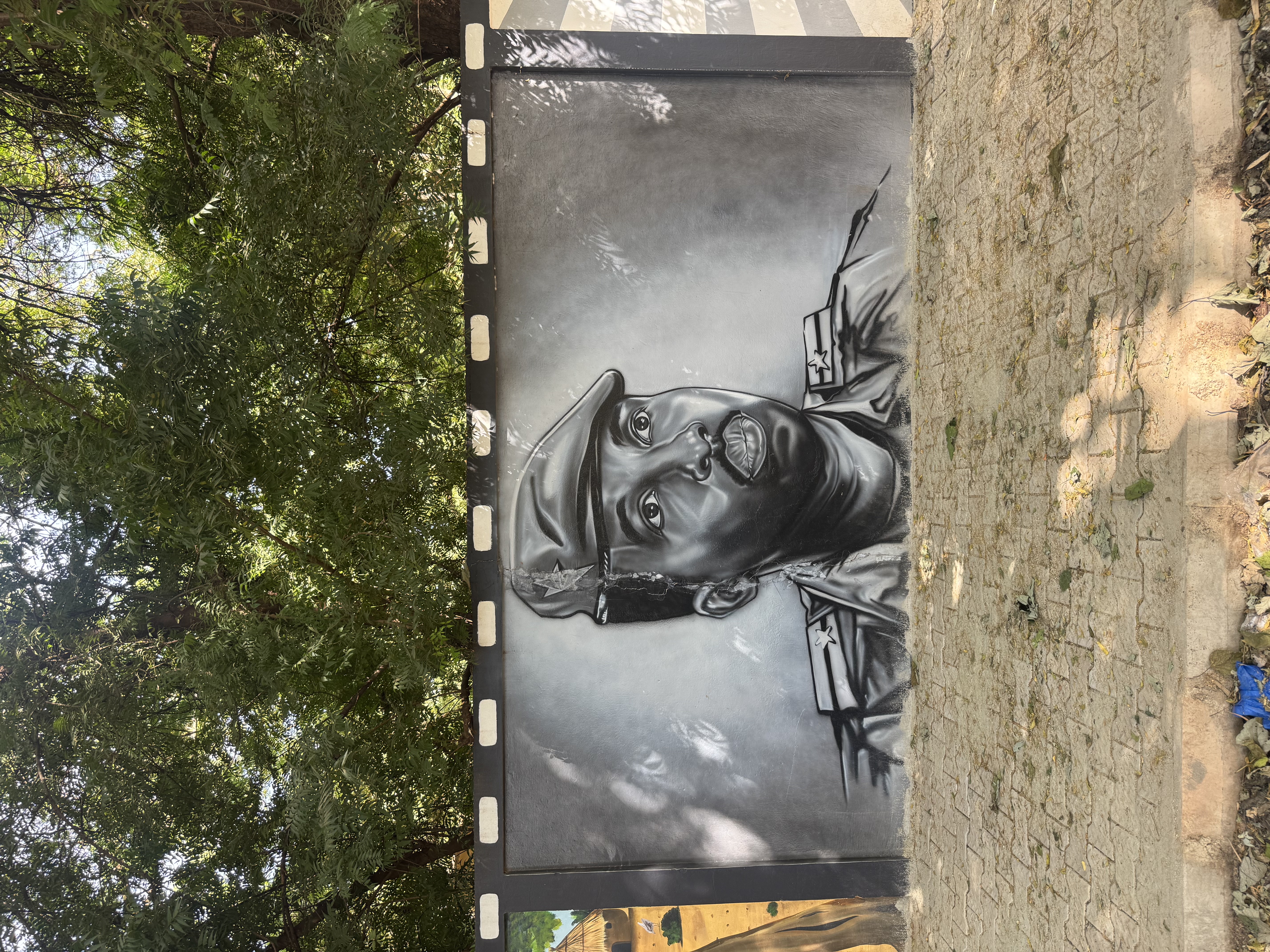
Burkina Faso has one of West Africa's most distinctive modern histories. Thomas Sankara, who led the country from 1983 to 1987 and renamed it from Upper Volta, remains a towering figure in national memory — his push for self-sufficiency, land reform and women's rights, cut short by his assassination, is still openly discussed and commemorated across the country, and you'll see his image and memorials in Ouagadougou.
One tradition worth knowing about before you arrive is rakiire, or 'joking cousins' — a centuries-old system of alliances between different ethnic groups and clans that permits, and even encourages, good-natured teasing and mock insults between members. It's a genuine social institution used historically to defuse conflict, and you may see it play out between Burkinabè in markets or on the street — it's all in good humour, not a sign of real tension.
Burkina Faso is also home to some of West Africa's oldest known iron-smelting sites, with archaeological evidence of ironworking dating back roughly 2,700 years — a reminder of just how long organised society has existed in this part of the Sahel, long before colonial borders were drawn.
What to Pack for Burkina Faso
Pack light, breathable clothing for Sahel heat, with something warmer for cooler nights between November and February. Sturdy, comfortable footwear is worth having for Tiébélé and the rock formations around Banfora and Sindou. A universal adapter (Burkina Faso uses the European two-pin plug, type C/E), a reusable water bottle with a purification option, a good sun hat and DEET-based mosquito repellent round things out. Bring more cash than you think you’ll need, given how limited card acceptance is outside the capital, and pack a mix of denominations — small notes make markets and local transport much easier.
When Is the Best Time to Visit Burkina Faso?
Late November to late February is the best window, with cooler, more comfortable temperatures across the country and minimal rainfall. October is also worth considering if you want to catch markets at their most abundant, right after harvest, though it can still be humid. The hottest months, from March to May, push well past 40°C in the middle of the day and are best avoided if you can help it. The wet season runs roughly June to September, bringing welcome relief from the heat but also the odd washed-out road, particularly further from Ouagadougou.
Burkina Faso isn’t an easy sell, and we’re not going to pretend it is. But for travellers who go in with clear eyes about the current situation, it remains one of the most rewarding, culturally rich countries in West Africa — Tiébélé alone is worth the trip.
Do we offer Burkina Faso tours?
Yes — as part of our West Africa Sahel tour alongside Mali and Niger. Take a look at our Burkina Faso tours for what’s currently running.
How can I book a tour?
Send us an email at [email protected] and we’ll help you plan your trip.