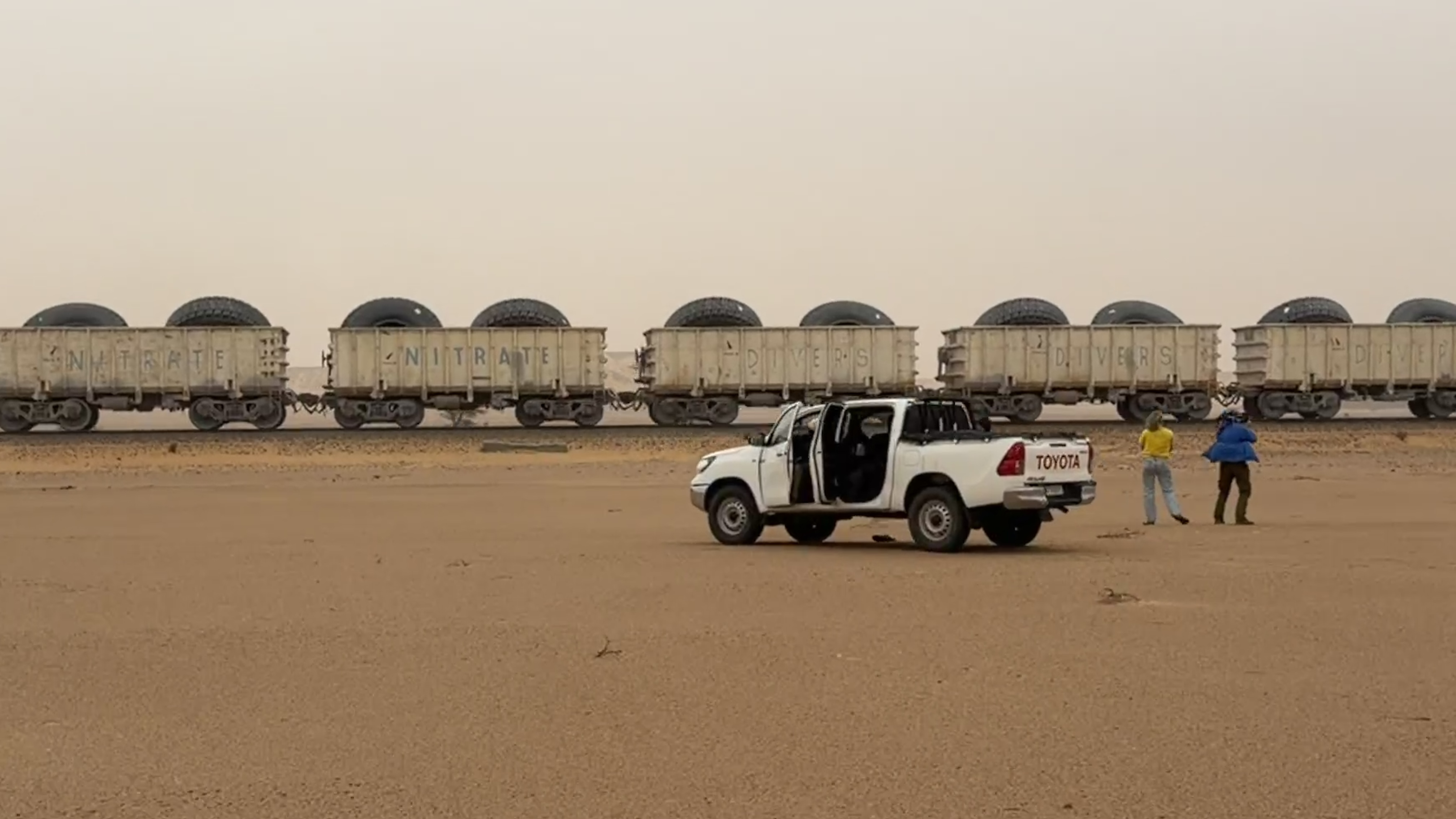
Mauritania is roughly 90% Sahara. It's home to a ring-shaped geological structure so big you can only really appreciate it from space, and it's the starting point for the longest train in the world. With a bit of patience and some luck, you can still climb on top of it and ride across the desert for free.
Mauritania sits on the Atlantic coast of North West Africa. Western Sahara is to the north, Algeria to the north east, Mali along its long eastern and southern border, and Senegal at its southern tip. It's a huge country and a sparsely populated one. Almost everything you'll actually see clusters around Nouakchott, the coast, and a handful of desert towns further inland.
This guide pulls together everything you need before you go — visas, getting in, money, health, safety, food, the sites worth building a trip around, languages, and when to visit. Where we've written a full standalone guide on a topic, we've linked to it, so use this as your starting point and dig into the specifics from there.
Why Visit Mauritania?
In a nutshell, this is the Sahara without the crowds. Not a day trip from Marrakech, but the real, empty, 90%-of-the-country version of it. On top of that you get a handful of experiences you genuinely can't have anywhere else. Hitching a ride on top of the world's longest train is the obvious headline act, but there's also camel markets, ancient manuscript libraries slowly being swallowed by sand, and a geological oddity so large you can really only make sense of it from orbit.
Mauritania is also still a long way off the beaten path. Tourist infrastructure is thin, English is rare, and most travellers who make it here are genuinely surprised how few other foreigners they run into. Chinguetti was once one of the most important cities in the Islamic world, with more than thirty manuscript libraries. Now it sees a trickle of visitors a year, not the queues you'd find at a comparable UNESCO site elsewhere.
There's more backstory here than fits into one guide, so we've covered some of it separately: 10 Reasons Why You Should Visit the Sahel , the more complicated Leblouh and the Dangers of Achieving Beauty in Mauritania , and, for something lighter, More Music from Saiga's Destinations Part 3 .
How Do I Get a Visa for Mauritania?
Almost every nationality now needs an eVisa arranged before arrival. The old, simple visa-on-arrival system was scrapped in January 2025. A handful of nationalities are visa-exempt, including Algeria, Ivory Coast, Gambia, Libya, Mali, Niger, Senegal, and Tunisia. You apply online for a 30, 60, or 90 day visa, uploading a plain-background photo and a passport scan, then print a paper copy to bring with you. You'll pay for it in cash on arrival at the airport or land border: 55 EUR or 60 USD, in exact notes.
We'll keep this section brief. The full breakdown, including the site's quirks and how far ahead to apply, is in our dedicated Guide to the Mauritania Evisa System .
How Do I Get Into Mauritania?
Nouakchott–Oumtounsy International Airport (NKC) is the main gateway. Mauritania Airlines is the flag carrier and runs the most routes, alongside Royal Air Maroc, Air Algérie, Air France, Air Senegal, Tunisair, Turkish Airlines, Binter Canarias, and ASKY Airlines. Paris is currently the only direct European link. Everything else connects through regional hubs like Casablanca, Algiers, Dakar, or Tunis.
Overland, the most-used crossing is with Western Sahara near Nouadhibou in the north. There are further crossings into Senegal at Diama and Rosso in the south. We wouldn't currently recommend the Mali crossings. The Mauritanian government has designated “No Movement Zones” along parts of that border, and one of the two main crossings has been closed since April 2024. There's also a remote crossing into Algeria between Zouérat and Tindouf, though it needs special permission, and there's 700km of open desert between the two towns.
We've written about both sides of getting in: Which Airlines Fly to Nouakchott, Mauritania? and Popular Land Border Crossings of Mauritania , if you're weighing up your options.
What's the Currency, and How Much Does It Cost?
Mauritania's currency is the ouguiya (MRU). The name comes from the Hassaniyya Arabic word for “ounce,” which originally referred to the price of an ounce of gold. A 2018 redenomination dropped a zero from the old currency, so 10 old MRO became 1 new MRU. Prices quoted the old way still turn up often enough that it's worth asking which one you're being quoted if a number looks off. Most people will tell you honestly. ATMs are rare and unreliable, and card acceptance is minimal outside a few hotels, so bring cash. USD, EUR, and CFA francs are all easy to change, mostly in Nouakchott. Budget roughly $10 to $20 a day for meals. Don't be shy about haggling in the markets either. The going rate for tourists is inflated by default, and negotiating prices by drawing numbers in the sand is half the fun of it.
Health
A yellow fever vaccination certificate is required if you're arriving from a country with yellow fever risk, and it's worth having regardless. Malaria is a real consideration. Risk is high year-round in the southern provinces, high in the northern provinces from July through October, and low the rest of the year in the north. Talk to a travel clinic about prophylaxis based on your actual route and timing. Hepatitis A, typhoid, and a polio booster are all commonly recommended, along with a meningococcal vaccine if you're travelling in the dry season from November to June. Medical facilities outside Nouakchott are limited. Comprehensive travel insurance with evacuation cover is worth treating as essential rather than optional, and bring your own basic first aid kit and any prescription medication.
Is It Safe to Travel to Mauritania?
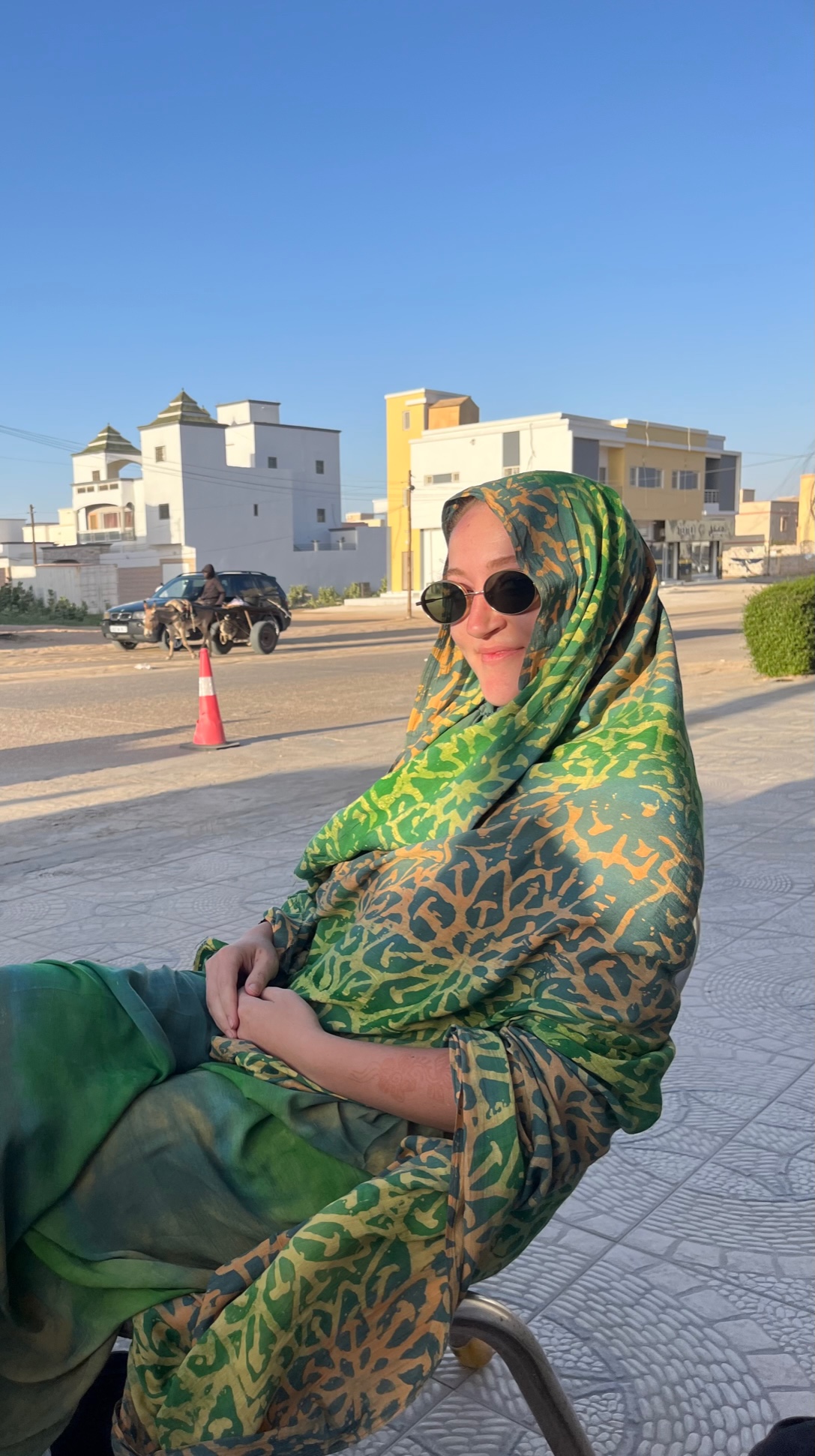
Day to day, on the ground, yes. The question we get most from past travellers is some version of “is it really okay?”, and for the areas our tours actually run in, the honest answer is yes, with the same normal precautions you'd take anywhere. It's also safe for women travelling solo. Head coverings aren't required, though some solo female travellers choose to cover up simply to draw less attention in what's a conservative, Islamic country.
The official picture is more cautious than that. The US State Department currently rates Mauritania Level 3, “Reconsider Travel,” citing terrorism and crime risk and specifically flagging areas north of the Tropic of Cancer and within 100km of the Mali and Algeria borders. The UK FCDO advises against travel beyond Nouakchott, Nouadhibou, and Atar, and against the areas close to the Malian border in the south. Both of those broad advisories cover a lot of empty desert most travellers never go near.
What we can tell you honestly is that our tours stick to an established route: Nouakchott, the Adrar region around Chinguetti and Atar, and the iron ore train corridor up to Nouadhibou. That's well away from the border areas both advisories are actually worried about. Alcohol and pork are both illegal in the country. You'll be asked about both at immigration, so don't bring either with you.
Food
Mauritanian food reflects its desert, nomadic, and Islamic roots. It's hearty, meat-and-rice heavy, and built around hospitality. Thieboudienne, rice cooked with fish, vegetables, and a rich tomato sauce, is generally considered the national dish and worth prioritising. Mechoui, slow-roasted whole lamb, turns up at celebrations, couscous is a staple at family gatherings, and boulfaf is one for the more adventurous eaters: grilled liver wrapped in caul fat, traditionally made for Tabaski. Mint tea is the real institution though. Expect to be served it in three distinct rounds over the course of a visit, each one brewed a little differently, and expect to be invited to share it more or less everywhere you go. Alcohol is illegal and effectively unavailable outside a few international hotels.
What Are the Main Sites to See in Mauritania?
Nouakchott is worth a day or two rather than a full trip in itself. The chaotic, colourful Port de Peche fish market and the camel market, the second largest in Africa, are the highlights. From there, most itineraries head into the Adrar region. Chinguetti is one of the most ancient towns in the country and was once a major stop on the pilgrimage to Mecca. It still protects centuries-old manuscripts in its five remaining libraries. Nearby, Tergit Oasis is the classic spot to swim and cool off against a backdrop of bare rock and sand.
The Richat Structure, also known as the “Eye of Africa,” is a set of concentric rock rings roughly 40km across. Ben Amera, the world's second-tallest monolith after Uluru, is out the same way. Both are best reached by 4x4. Further north, Nouadhibou and the Cap Blanc peninsula are the usual endpoint for the iron ore train, and also home to one of the world's last colonies of endangered monk seals.
We've written about a good chunk of this individually: Mauritania's Top 5 Must-See Attractions , and Can You Still Ride the Iron Ore Train 2025 on the logistics of actually getting up on top of the ore cars, and why it's getting harder to do.
Languages
Arabic is the official language, though the dialect you'll actually hear day to day is Hassaniyya Arabic, spoken by around 70 to 80% of the country. It's distinct enough from Modern Standard Arabic that even Arabic speakers from elsewhere sometimes struggle with it. French is widely understood as a legacy of colonial rule and is genuinely useful for travellers. In the south, near the Senegal and Mali borders, you'll hear Mauritania's three national languages: Pulaar, Soninke, and Wolof. There are also small Berber-speaking communities: Zenaga, now nearly extinct, and Tamashek, spoken by Malian-origin Tuareg settlers. English is limited to guides and tourism-facing staff, so travelling with someone who bridges the gap matters here.
When Is the Best Time to Visit Mauritania?
November through March is the sweet spot. Days are warm and comfortable without the brutal summer heat, though temperatures drop enough at night in the desert that you'll want a jacket. It's also outside the July to October window when malaria risk climbs in the northern provinces, which is worth factoring in if your route runs up through Adrar and the iron ore train corridor.
Do We Offer Mauritania Tours?
Yes. Our Mauritania Iron Ore Train Tour is a 7-day trip built around riding the train itself, alongside Chinguetti, the desert, and more camels than you'll know what to do with. For a longer trip, the Mauritania and Algeria Winter Combo Tour pairs it with Algeria's Sahara over 14 days, and Mauritania also features as part of The Extreme North Africa Tour , our 21-day loop through four of the region's least-visited countries. We've also written more on why a small-group tour makes sense here specifically: Join a Small Group Tour to Mauritania: 5 Reasons to Travel With Saiga .
How Can I Book a Tour?
Get in touch at [email protected] and we'll help you find the right dates, talk through what a trip like this actually involves, and get you booked in.